
{\"translation\": \"
Zygoma implant is one of the advanced implant applications evaluated in patients who experience advanced bone loss in the upper jawbone and do not have sufficient bone volume for traditional implant treatment. Especially for patients who have been edentulous for a long time, developed upper jawbone resorption, or are seeking implant treatment due to bone deficiency, the zygomatic implant option may come into question. In this treatment, unlike classic implants, support is taken from the zygoma bone, a strong structure in the facial region, instead of the upper jawbone.
Zygoma implant treatment is a process that requires more detailed planning and advanced surgical experience compared to standard implant applications. Therefore, questions such as “what is a zygomatic implant?”, “who is a zygoma implant suitable for?”, “what should those who get a zygoma implant pay attention to?” are among the most frequently wondered topics by patients before treatment. The suitability of the treatment should be determined by evaluating the patient's bone structure, oral health, general health status, and prosthesis needs together.
For patients researching Bursa zygoma implant treatment, the most important step is a personalized evaluation with a detailed examination and three-dimensional imaging. The zygoma implant process at Klinik Bursa is planned by considering the upper jawbone, zygoma bone, implant planning, and the prosthetic structure to be made afterwards. In this article, we will discuss what a zygoma implant is, who it might be suitable for, how zygomatic implant treatment is performed, what to pay attention to after treatment, and the key factors affecting prices in a patient-focused manner.
What is a Zygoma Implant?
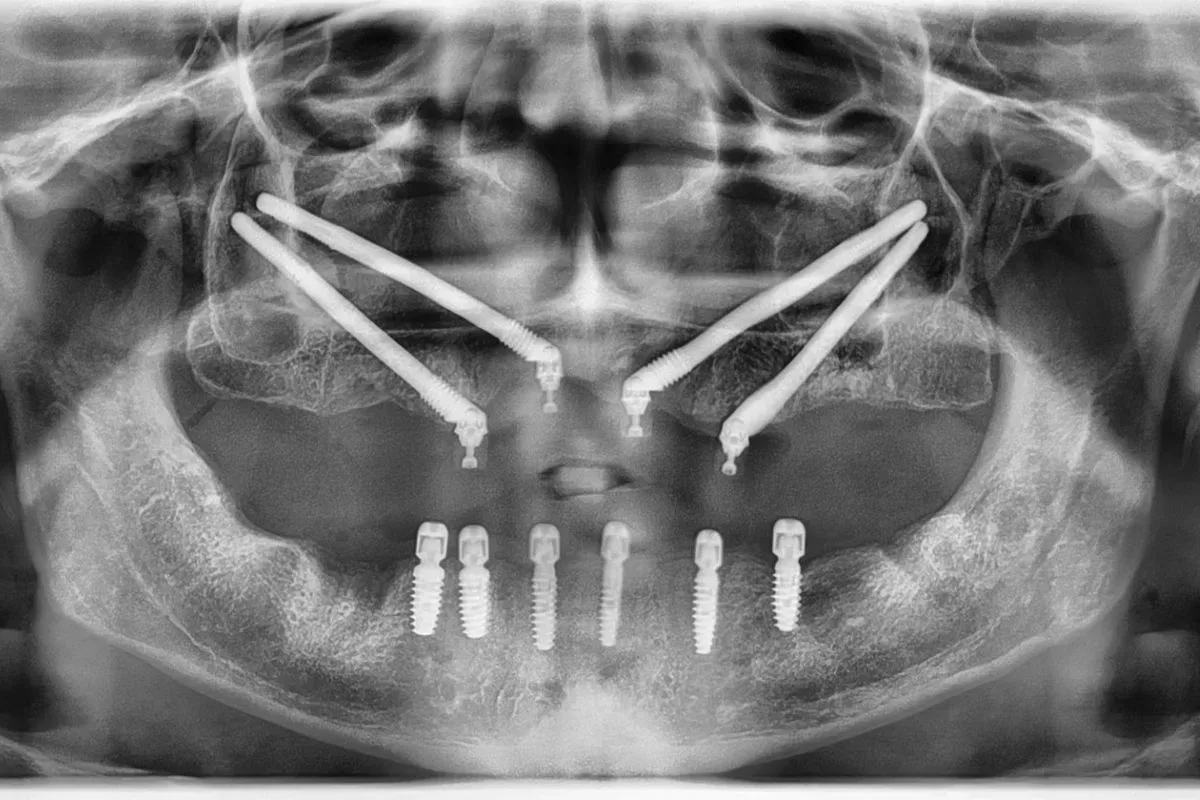
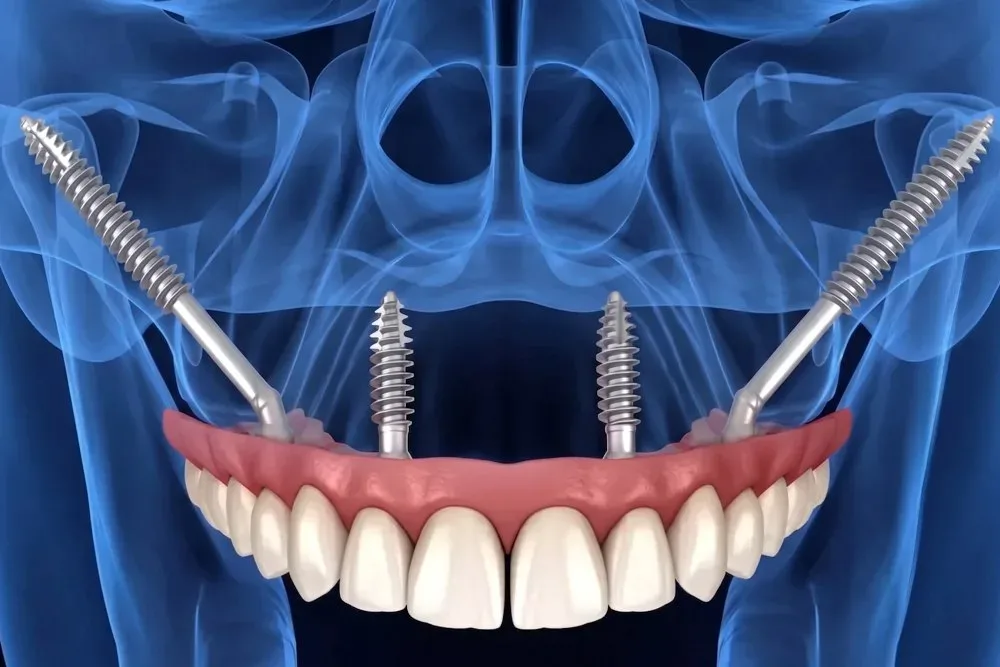
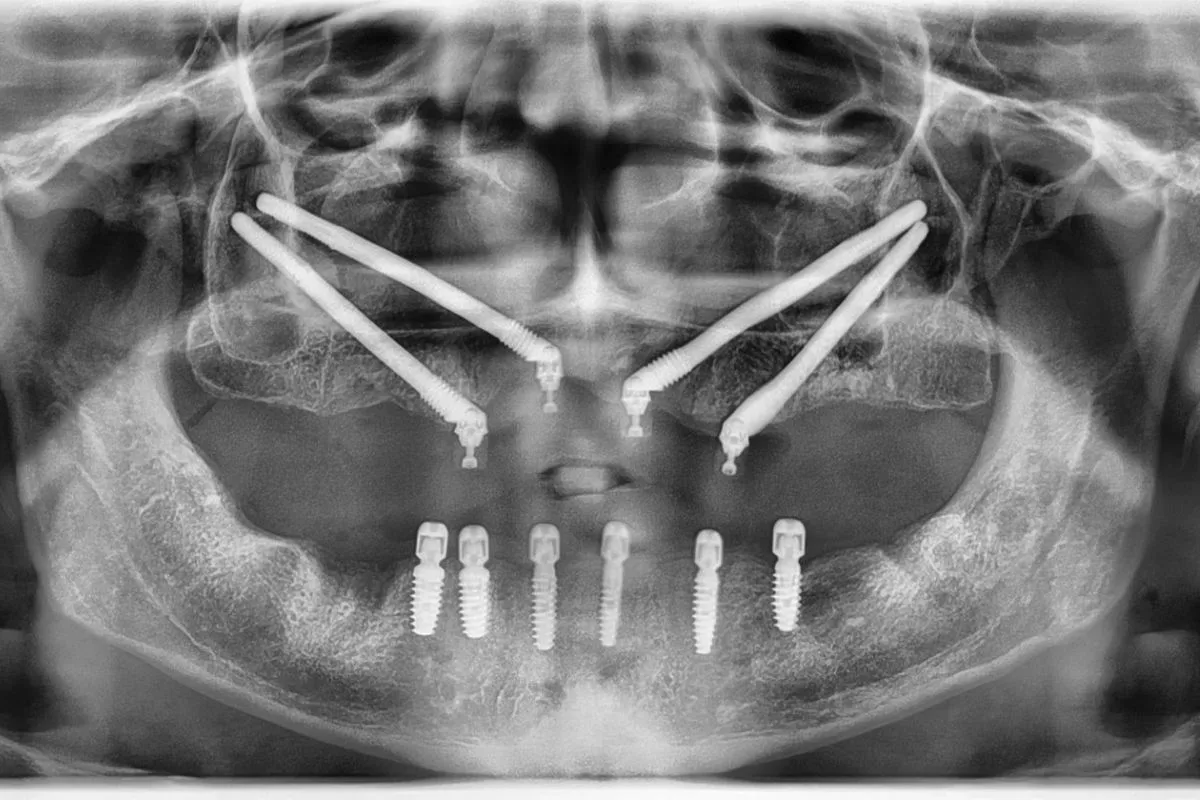
Zygoma implant is a special implant treatment evaluated in patients with advanced bone loss in the upper jawbone. While implants are placed in the jawbone in traditional implants, longer implants are used in zygoma implant treatment, and support is taken from the zygoma bone, also known as the cheekbone. This method is among the advanced implant treatment options, especially for patients without sufficient bone volume in the upper jaw.
The simplest answer to the question “what is a zygomatic implant?” is; a surgical treatment method applied by fixing the implant to the zygoma bone, a stronger bone structure, when there is insufficient upper jawbone for a classic implant. This way, fixed prosthesis planning may become possible in some patients who cannot undergo standard implant treatment due to bone deficiency.
Zygomatic implant requires more comprehensive evaluation and advanced surgical planning compared to standard implant applications. Since it may not be suitable for every patient, a detailed examination, three-dimensional imaging, and personalized planning are required before treatment. The goal is to determine the most suitable treatment approach for the patient's bone structure and oral health.
What is the Zygoma and Why is the Zygoma Bone Important?
The question “what is the zygoma?” is one of the topics frequently wondered by patients researching zygoma implant treatment. The zygoma is a strong bone structure located on the side of the face, commonly known as the cheekbone. This bone, which plays an important role in supporting the facial form, can be considered as a support point in some advanced implant treatments due to its structural durability.
The zygoma bone gains importance, especially in patients with severe bone loss in the upper jawbone. In traditional implant treatment, sufficient bone volume is required in the upper jawbone for implants to be placed. However, due to prolonged edentulism, bone resorption, trauma, or advanced periodontal problems, there may not be sufficient bone support in the upper jaw. In this case, classic implant treatment may become difficult or additional surgical procedures may be required.
In zygoma implant treatment, for some patients with insufficient upper jawbone, support is taken from the zygoma bone. This allows implants to be planned with a longer structure and fixed to the cheekbone. However, this method is not suitable for every patient; the structure of the zygoma bone, the upper jawbone condition, the sinus area, oral health, and prosthesis needs must be evaluated in detail. The treatment decision should be made after three-dimensional imaging and an examination by a specialist physician.
Who is a Zygoma Implant Suitable For?
The answer to the question “who can get a zygoma implant?” varies according to the patient's upper jawbone structure, oral health, and general health status. Zygoma implant is an advanced treatment option evaluated especially in patients with severe bone loss in the upper jaw and insufficient bone volume for classic implant treatment. This method may be considered in patients who have been edentulous for a long time, use an upper jaw prosthesis, or have insufficient bone support for traditional implants.
For patients wondering “who is zygoma suitable for?”, one of the most important criteria is that the upper jawbone is too insufficient to allow classic implant placement. Upper jawbone resorption can occur after prolonged tooth loss, advanced gum disease, trauma, infection, or previously unsuccessful treatment processes. In this situation, standard implant treatment may become difficult, and some patients may require additional surgical procedures such as bone grafting.
Zygoma implant is not a suitable treatment for every patient. The suitability decision is made by evaluating a detailed oral examination, three-dimensional tomographic imaging, the structure of the zygoma bone, the sinus area, existing tooth and gum health, general health status, and prosthesis planning together. Therefore, before starting treatment, the patient must be examined individually and surgical planning must be carried out carefully.
How is Implant Treatment Planned in Case of Bone Deficiency?
When planning implant treatment in case of bone deficiency, the patient's jawbone volume, bone density, and the anatomical structure of the area where the implant will be placed are first evaluated in detail. In traditional implant treatment, sufficient bone tissue is needed for implants to be supported in a healthy and long-lasting way. Especially in the upper jaw, bone volume may decrease due to prolonged edentulism, bone resorption, advanced gum disease, or trauma.
When there is significant bone loss in the upper jaw, classic implant treatment may not always be directly applicable. In this situation, advanced treatment options such as bone grafting, sinus lifting, or different surgical approaches may come into question. However, if bone loss is advanced in some patients, more comprehensive planning may be required. Within the scope of advanced implant treatment, not only the patient's existing bone structure but also their general health status, oral hygiene, prosthesis needs, and treatment expectations should be evaluated together.
Zygomatic implant is one of the special implant options that can be evaluated in suitable patients with severe bone deficiency in the upper jawbone. In this method, unlike classic implants, support is taken from the cheekbone, i.e., the zygoma bone. However, zygomatic implant is not suitable for every patient; the treatment decision should be made after three-dimensional imaging, detailed examination, and personalized surgical planning. The goal is to determine the most suitable, safe, and long-term functional treatment option for the patient's bone structure.
How is Zygomatic Implant Treatment Performed?
Zygomatic implant treatment is an advanced treatment process that requires more detailed evaluation and surgical planning compared to standard implant applications. In the first stage, an intraoral examination of the patient is performed; the upper jawbone, gum health, current prosthetic status, and overall oral structure are evaluated. Then, the upper jawbone, sinus area, and zygoma bone are examined in detail using tomography or three-dimensional imaging methods.
The answer to the question “what is a zygomatic implant?” in terms of the treatment process is; the placement of long implants to receive support from the cheekbone in suitable patients with insufficient upper jawbone. Therefore, during the surgical planning phase, the angle, length, placement point of the implants, and the design of the prosthesis to be made afterward are evaluated together. The goal is to place the implants with secure bone support and to create a fixed prosthesis plan that will support the patient's chewing function.
Zygomatic implant treatment should be planned individually as it is considered within the scope of advanced implant treatment. The procedure requires surgical experience and detailed anatomical knowledge. After treatment, the healing process, oral hygiene, medication use, diet, and control appointments are explained in detail to the patient by the physician. Since each patient's bone structure and treatment needs are different, the process is shaped individually according to examination and imaging results.
What is the Difference Between Zygoma Implant and Traditional Implant?
The main difference between zygoma implant and traditional implant is the bone structure from which the implants receive support. In traditional implant treatment, implants are placed directly into the jawbone, and sufficient bone volume must be present in the implant area for this procedure. If the jawbone is of sufficient thickness and density, classic implant treatment can be a suitable option for many patients.
However, in patients with severe bone loss in the upper jawbone, traditional implant application may not always be possible. In such cases, when planning implant treatment in bone deficiency, bone grafting, sinus lifting, or different advanced surgical options may be evaluated. Zygomatic implant, on the other hand, is applied in suitable patients with insufficient upper jawbone by placing longer implants to receive support from the cheekbone, i.e., the zygoma bone.
The choice of treatment is determined according to the patient's bone structure, oral health, edentulism status, general health condition, and prosthesis needs. While traditional implants may be preferred in more standard cases, zygoma implants are mostly evaluated in patients with advanced bone loss in the upper jaw and insufficient support for classic implants. Therefore, the decision on which method is suitable should be made after a detailed examination and three-dimensional imaging.
Importance of Zygoma Implant in Patients with Upper Jawbone Resorption
Upper jawbone resorption can occur after prolonged edentulism, advanced gum disease, trauma, infection, or previous tooth losses. After teeth are lost, the jawbone may gradually lose functional stimulation and decrease in volume. Especially when bone loss progresses in the upper jaw region, there may not be sufficient bone support for traditional implant treatment.
In such situations, implant treatment in case of bone deficiency requires more detailed planning. A certain bone thickness and height are necessary for classic implants to be placed in the jawbone. When bone loss is significant in the upper jaw, implant placement may become difficult; in some patients, bone grafting, sinus lifting, or different advanced surgical options may come into question. However, not every patient may be suitable for these procedures.
Zygoma implant is a special treatment option that can be evaluated in suitable patients with advanced bone loss in the upper jawbone. In this method, implant support is taken from the cheekbone, i.e., the zygoma bone, unlike classic implants. Thus, fixed prosthesis planning may become possible in some patients with insufficient upper jawbone volume. However, the suitability of the treatment must be determined with a detailed examination, three-dimensional imaging, and personalized surgical planning.
What Should Those Who Get Zygoma Implants Pay Attention to After Treatment?
Those who get zygoma implants should carefully follow the instructions given by the physician after treatment. Since zygoma implant is a special treatment requiring advanced surgical planning, oral hygiene, medication use, diet, and control appointments are of great importance during the healing process. Medications recommended by the physician should be used regularly, the implant area should not be strained, and oral care should be prioritized.
In the initial period after zygoma implant, soft foods should be preferred, and very hot, hard, or foods that could strain the implant area should be avoided. Smoking should be quit as much as possible or not used for the period recommended by the physician, as it can negatively affect the healing process. Maintaining oral hygiene helps reduce the risk of infection and promotes healthier tissue healing.
Control appointments after zygomatic implant treatment should not be missed. During these controls, the condition of the implants, soft tissue healing, prosthesis fit, and the patient's oral hygiene are evaluated. If pain, swelling, bleeding, bad odor, discomfort in the prosthesis, or any unusual situation in the implant area is felt, a physician should be consulted without delay. Regular follow-up during the post-treatment period is one of the most important stages for the long-term success of the zygoma implant.
What are the Advantages of Zygoma Implant Treatment?
Zygoma implant can offer an important treatment option for suitable patients with severe bone loss in the upper jawbone and insufficient bone volume for traditional implant treatment. Especially in cases where classic implant application becomes difficult due to upper jawbone resorption, fixed prosthesis planning can be done by taking support from the zygoma bone. In this respect, the zygoma implant can be considered an advanced alternative for patients experiencing bone deficiency.
One of the most important advantages of this treatment is that it can reduce the need for lengthy bone augmentation procedures in some patients. However, this is not applicable to every patient; the decision must be made after a detailed examination, three-dimensional imaging, and personalized surgical planning. The zygoma implant, evaluated within the scope of advanced implant treatment, can help support chewing function in upper jaw edentulism with correct patient selection and proper planning.
Zygoma implant treatment can provide comfort for individuals who have difficulty using removable prostheses, as it can be planned with the goal of a fixed prosthesis in suitable patients. However, the success of the treatment depends on the patient's bone structure, oral hygiene, general health status, surgical planning, and regular controls. Therefore, the zygoma implant should not be considered a \\\"definite solution for every patient,\\\" but rather a special implant treatment evaluated in suitable cases with advanced bone loss.
How is the Bursa Zygoma Implant Treatment Process Planned?
The first step in the Bursa zygoma implant treatment process is a detailed oral examination of the patient and a thorough evaluation of the upper jawbone structure. Since zygoma implant requires more advanced surgical planning compared to standard implant treatments, an intraoral examination alone may not be sufficient. Therefore, the upper jawbone, zygoma bone, sinus area, and implant placement areas are examined in detail using three-dimensional imaging methods.
During zygoma implant planning at Klinik Bursa, the patient's level of bone loss, existing tooth and gum health, long-term edentulism status, prosthesis needs, and general health status are evaluated together. The aim at this stage is to determine whether the patient is suitable for zygomatic implant treatment and to plan the treatment process safely. Since each patient's bone structure and oral anatomy are different, the treatment should be prepared individually.
When planning zygomatic implant treatment, not only the areas where the implants will be placed but also the design of the fixed prosthesis to be made afterward are taken into consideration. The angle, number, bone structure from which support will be taken, and the position of the prosthesis within the mouth are evaluated as a whole. Therefore, for patients who want to get a zygoma implant in Bursa, the most accurate approach is to create a personalized treatment plan after a detailed examination and imaging.
What Factors Affect Zygoma Implant Prices?
Zygoma implant prices can vary depending on the patient's upper jawbone structure, the level of bone loss, the number of implants to be applied, and the scope of surgical planning. Since this treatment requires more advanced evaluation compared to standard implant applications, pricing is not based solely on the number of implants. Three-dimensional imaging, the condition of the zygoma bone, the sinus area, oral health, and prosthesis needs must be evaluated together.
In zygoma implant applications planned within the scope of advanced implant treatment, the implant materials used, the complexity of the surgical process, the type of temporary or permanent prosthesis, the need for additional treatment, and the control process can affect the price. While zygomatic implant planning alone may be sufficient for some patients, others may require treatment of intraoral infections, tooth extraction, prosthesis renewal, or additional surgical preparations. Therefore, each patient's treatment plan is created differently.
For patients researching Bursa zygoma implant treatment, clear price information should be determined after a detailed examination and imaging. This is because the goal in zygoma implant treatment is not just to place implants, but to create a healthy, functional, and personalized prosthesis plan that the patient can use long-term. The most accurate pricing can be made after the bone structure, number of implants, surgical needs, and prosthesis plan are clarified.
\"}