
Tooth loss not only makes chewing more difficult; over time, it prevents stimulation of the jawbone, leading to bone tissue resorption (atrophy). Especially in patients with long-term tooth loss in the upper jaw, sagging of the sinus cavities and the vertical and horizontal depletion of bone volume can make standard dental implant procedures impossible or very complex. In the past, in such cases, bone powder grafts that took months were performed by taking bone from the hip or pelvic bone (autogenous graft), whereas today jaw surgery technologies offer more direct solutions.
If you have advanced bone loss in your upper jaw, have been told that there is "insufficient bone" for standard implant treatment, and are looking for detailed, objective information about the medical basis of Bursa zygomatic implant procedures, this guide explains the working principle and surgical stages of cheekbone implants.
This article has been prepared in full compliance with healthcare information regulations, with the aim of informing the public about advanced jaw surgery solutions.
What Is a Zygomatic Implant (Cheekbone Implant)?
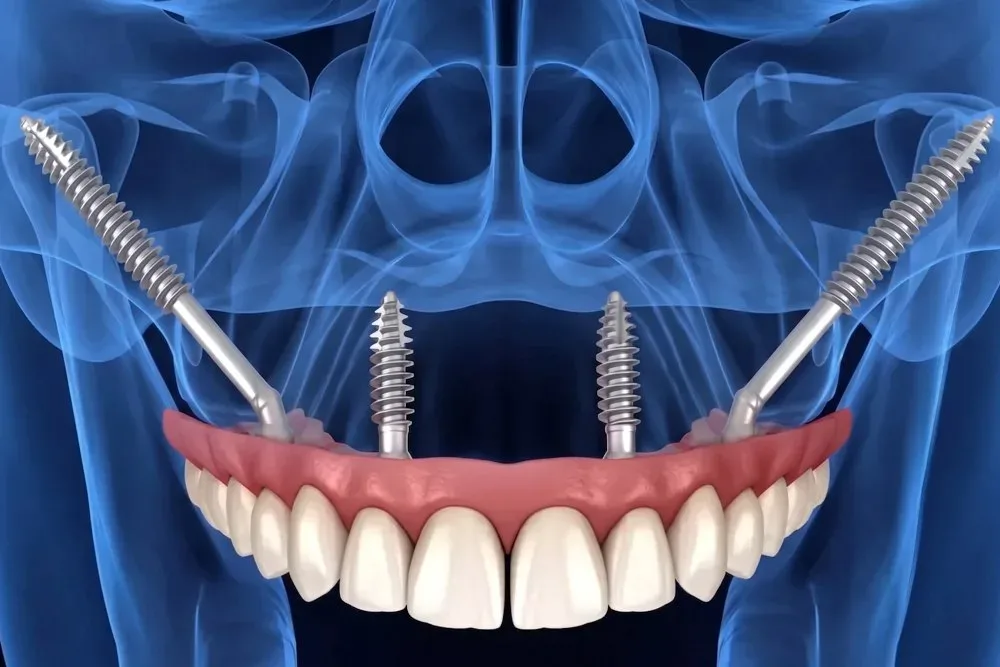
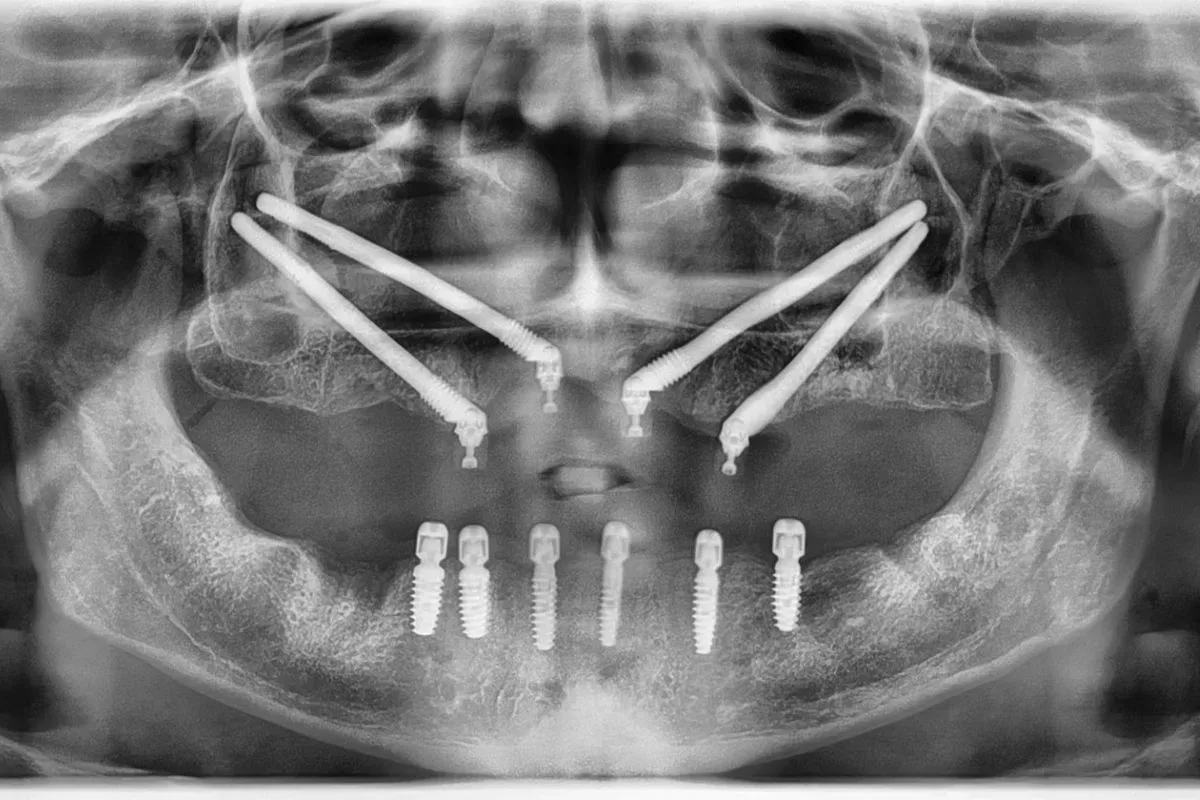
A zygomatic implant is a specially long implant system used in patients who do not have enough healthy bone tissue in the upper jaw bone (maxilla) to support teeth; it bypasses the upper jaw bone and is anchored directly to the cheekbone (zygoma), one of the densest and hardest bones in facial anatomy.
While the length of a standard dental implant usually ranges between 8 and 13 millimeters, zygomatic implants are between 30 and 55 millimeters long. These implants are made from titanium alloys with proven biocompatibility. The cheekbone (zygomatic bone) has a cortical bone structure that does not undergo resorption due to aging or tooth loss and retains its density throughout life. Thanks to this, the implant achieves high primary stability (initial anchoring force) from the cheekbone even if there is no bone at all in the jawbone.
In Which Cases Is a Zygomatic Implant Needed?
Cheekbone implants are not a first-line treatment applied for every missing tooth. They are an advanced surgical method preferred in special cases with severe bone destruction. The main situations in which a zygomatic implant is medically indicated are as follows:
Advanced Upper Jaw Bone Atrophy: Cases in which the upper jawbone has resorbed due to long years of using removable dentures (palate dentures) or tooth loss at an early age.
Failed Sinus Lift and Graft Procedures: Cases in which previous sinus lifting (sinus floor elevation) or bone graft (bone powder) procedures have failed and the bone has not accepted the graft.
Anatomical Losses and Trauma: Patients who have lost part of the upper jawbone after tumor surgery (maxillectomy) or individuals who have suffered severe facial trauma.
Demand for Fixed Prostheses: Patients with advanced bone loss who cannot use removable palatal dentures, have a strong gag reflex, and want to regain fixed teeth as soon as possible.
Comparison with Traditional Implant and Bone Grafting Procedures
In a patient with severe bone loss, the traditional approach is based on taking a bone block from the pelvic bone or jaw, grafting it to the upper jaw (autogenous graft), lifting the sinus floor, and waiting 6 to 12 months for the bone to fuse. This process creates pain from a second surgical site for the patient and can extend the treatment time to up to 1.5 years.
With zygomatic implant treatment:
There is no need for months-long bone grafting and sinus elevation surgeries.
Surgical trauma is reduced because bone is not taken from a second area.
Thanks to the high anchorage force in the cheekbone, temporary fixed prostheses can be placed on the patient on the day of surgery or within the first few days (Immediate Loading). The patient can leave the clinic the same day with fixed temporary teeth.
Bursa Zygomatic Implant: Surgical Procedure and Recovery Stages
Zygomatic implant operations performed in well-equipped jaw surgery centers in Bursa require highly precise planning and a high level of surgical discipline. The process proceeds step by step as follows:
1. Three-Dimensional Tomography (CBCT) and Surgical Planning
The most vital stage of treatment is diagnosis. The upper jaw, sinus cavities, eye socket (orbit), and cheekbones are examined with 3D Dental Tomography. The implant's entry angle, its relationship with the sinus, and its millimetric position are determined digitally. Surgical guide plates are prepared when necessary.
2. Anesthesia Stage
Because of its anatomical depth and surgical scope, zygomatic implant operations are usually performed under General Anesthesia or Deep Sedation in an operating room setting. Since the patient is asleep during the operation, they do not feel any pain or discomfort.
3. Surgical Operation
The maxillofacial surgeon opens the upper jaw gum and reaches the cheekbone with a specially prepared curve from the outer wall or through the sinus. The 30-55 mm zygomatic implant is placed into the socket prepared at the predetermined angle. Depending on the case, 2 zygomatic implants in the upper jaw + standard implants in the anterior region, or completely 4 zygomatic implants (Quad Zygoma), may be placed.
4. Placement of Temporary Prosthesis (Same-Day Loading)
If the anchorage value (torque) of the implants in the cheekbone reaches a sufficiently high level, measurements are taken and a temporary fixed prosthesis screwed onto the patient's implants is placed on the same day or the next day. The patient spends the bone healing process not without teeth, but with fixed temporary teeth.
5. Recovery and Permanent Prosthesis
After approximately 3 to 4 months of bone integration (osseointegration), the temporary prosthesis is removed and replaced with a permanent fixed prosthesis with zirconium or porcelain infrastructure, which is measured and then bonded or screwed into place.
Medical Rules to Follow After the Operation
The basic criteria patients should follow during the recovery period after zygomatic implant surgery are as follows:
Cold Compress: Since the surgical intervention involves the cheekbone area, swelling (edema) and mild bruising in the cheeks during the first 48 hours are medically normal. Intermittent ice application from the outside of the cheek helps keep the swelling under control.
Diet: During the first 3 months when the temporary prostheses are in place, hard foods (hazelnuts, tough meat, etc.) should not be brushed or chewed in order not to risk bone-implant fusion; a soft, lukewarm diet should be followed.
Medication Use: Antibiotics, painkillers, and special nasal sprays prescribed by the doctor (to protect sinus health) should be used as scheduled without interruption.
Oral Hygiene: To prevent the surgical sites from becoming infected, antiseptic mouth rinses recommended by the doctor should be used, and the suture areas should be cleaned gently with soft brushes without being irritated.
Smoking Restriction: Tobacco products should absolutely not be used during the recovery period because they impair tissue blood flow and affect sinus pressure.
Who Should Perform It?
Zygomatic implant surgery requires working in a very different anatomical area from standard implant procedures (facial bones). Because of the proximity to the eye socket, the cheek vascular-nerve bundle, and the sinus cavities, it is vital that these operations be performed by a Oral, Dental and Maxillofacial Surgeon (Maxillofacial Surgeon) in a fully equipped clinic or hospital setting.
Severe bone loss is not destiny; with the right surgical techniques and advanced implant systems, it is possible to provide even patients with no jawbone left with a fixed, functional, and aesthetic smile.
Legal Notice and Information
This page content has been prepared solely to inform the public about advanced jaw surgery processes, within the framework of the Law No. 1219 on the Practice of Medicine and Its Branches and the Ministry of Health's Regulation on Promotional and Information Activities in Healthcare Services. The information contained herein cannot be used in the diagnosis or treatment of diseases, does not contain medical guarantees such as "definite success," and does not constitute unfair competition. In order to determine the most suitable treatment plan for your oral and jaw structure, you need to undergo an examination by directly consulting an oral, dental and maxillofacial surgeon.