
“What is an implant?” is one of the most frequently asked questions by patients who are missing teeth and are looking for a permanent treatment option. A dental implant is a structure placed in the jawbone to replace a missing tooth and serve as an artificial tooth root. By attaching a prosthetic tooth, crown, or bridge to this structure, the goal is to restore both the aesthetic appearance and chewing function.
Dental implant treatment is not performed solely to restore the appearance of a missing tooth. Over time, missing teeth can affect chewing balance, ease of speech, the position of adjacent teeth, and overall oral health. For this reason, implant treatment can be considered a long-term solution that offers a sensation similar to that of a natural tooth in suitable patients.
For patients in Bursa considering implant treatment, proper planning, a detailed examination, and a personalized treatment process are of utmost importance. As Klinik Bursa, in this article we will address frequently asked questions—such as what an implant is, who is a candidate for dental implants, how the procedure is performed, how the post-implant healing process progresses, and what to consider during treatment—from a patient-centered perspective.
What Is a Dental Implant?
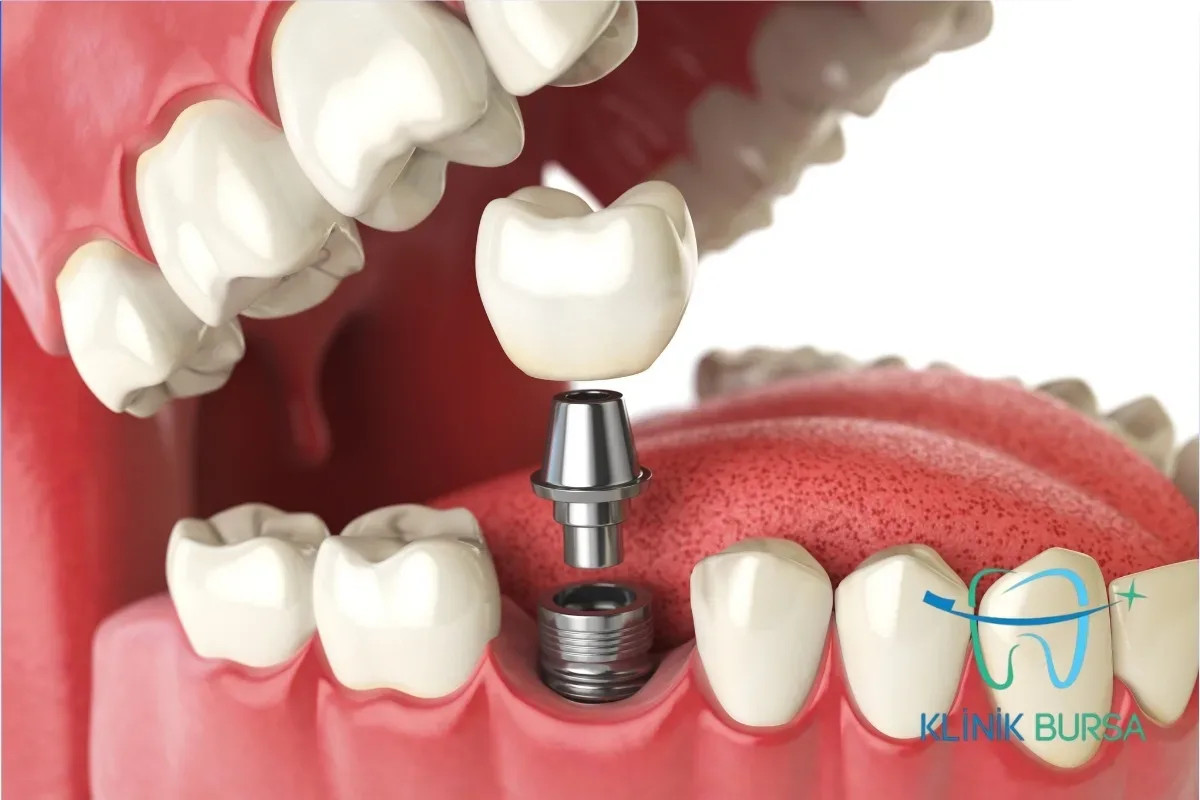
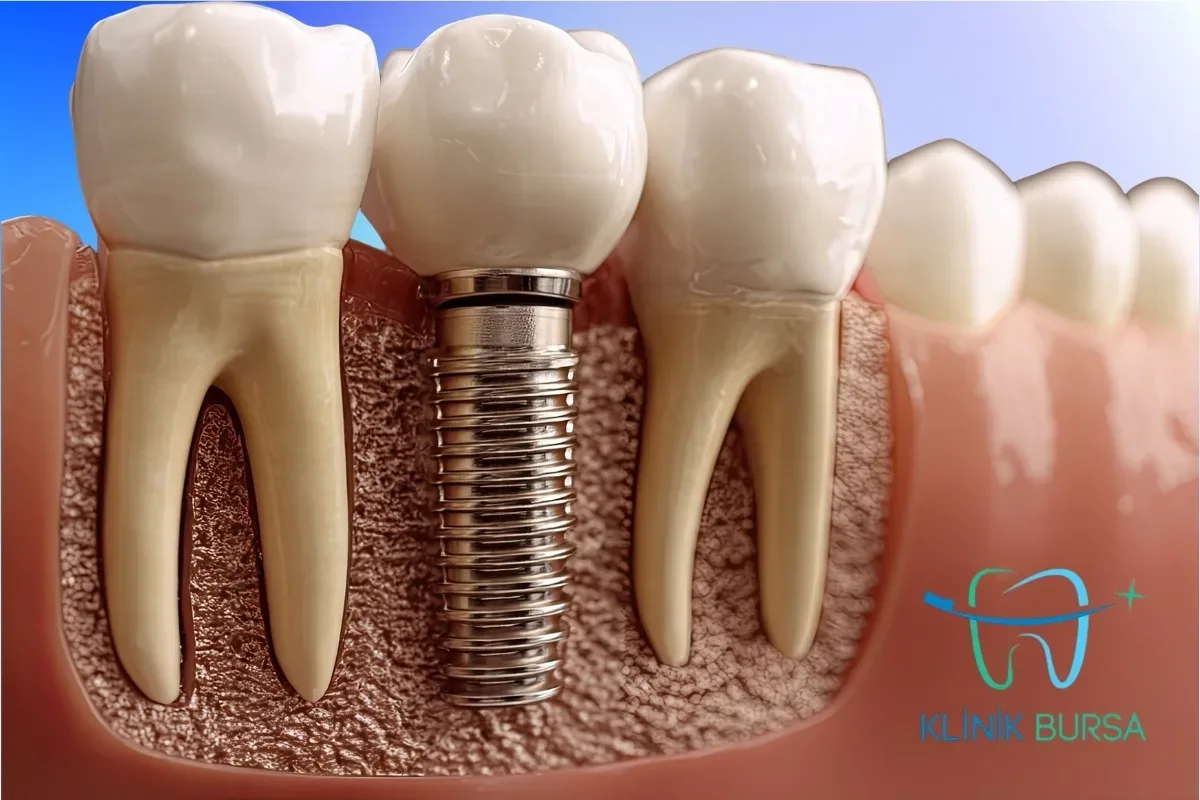
“What is a dental implant?” is one of the most frequently asked questions by patients with missing teeth as they research treatment options. A dental implant is a screw-like artificial tooth root that mimics the root of a missing tooth and is placed into the jawbone. This structure is typically made of biocompatible materials such as titanium, and the goal is to restore the appearance and function of the missing tooth by attaching a prosthetic tooth, crown, or bridge to it.
To explain the question “What is a dental implant?” in simpler terms: an implant provides a fixed foundation to replace a lost natural tooth. Just as the root of a natural tooth anchors the tooth to the jawbone, the implant serves as a similar support for the new tooth. This allows the patient to enjoy a more stable and comfortable experience compared to removable dentures.
An implant is not merely a procedure performed for aesthetic purposes. Missing teeth can, over time, affect chewing balance, ease of speech, the position of adjacent teeth, and overall oral health. For this reason, implant treatment is considered an important treatment option both for achieving a tooth that closely resembles a natural one and for supporting chewing function.
In Which Cases Is a Dental Implant Recommended?
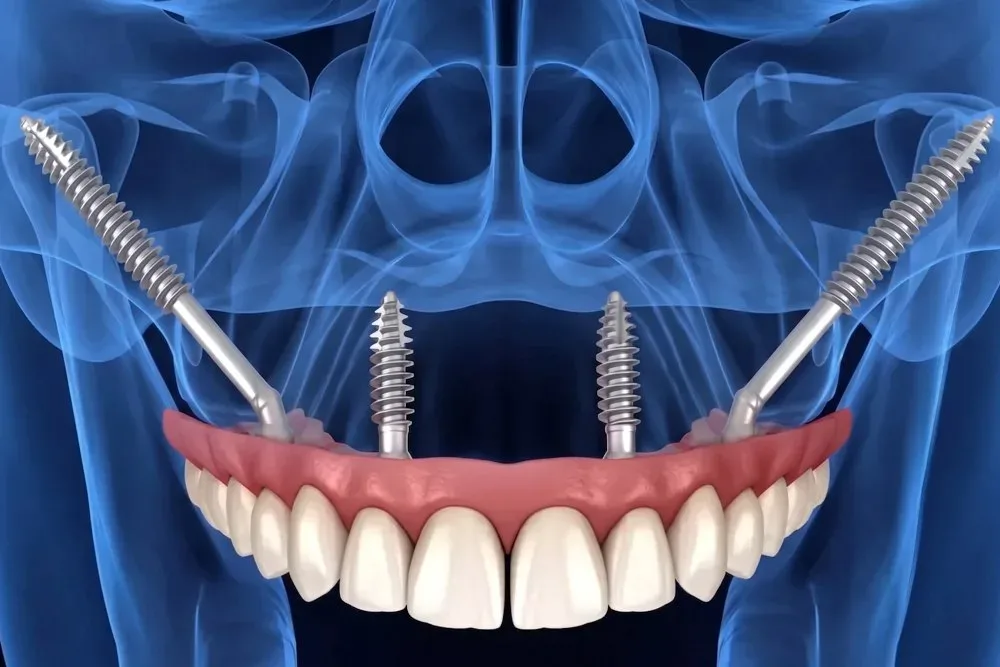
Dental implants are a treatment option that can be chosen in cases of a single missing tooth, multiple missing teeth, or complete edentulism. In the case of a single missing tooth, the missing tooth area can be replaced with an implant without affecting the adjacent healthy teeth. In cases of multiple missing teeth, implants can be planned to serve as support for fixed bridges or dentures.
In addition to the question “What is a dental implant?”, determining which patients are suitable candidates is also crucial for treatment planning. When considering implant treatment, the patient’s jawbone structure, gum health, overall health, and oral hygiene habits are evaluated together. This is because the long-term success of an implant depends not only on the placement procedure but also on the health of the bone and gum tissues supporting the implant.
In cases of complete edentulism, implant treatment can also be used to make removable dentures more stable and comfortable. However, the same treatment plan is not applied to every patient. A personalized implant treatment plan is created by evaluating the number of missing teeth, bone density, occlusion, and the patient’s expectations. At Klinik Bursa, the patient’s oral structure and needs are examined in detail when planning implant treatment.
Who Is Eligible for Implants?
The question of who is a candidate for dental implants is crucial for patients with missing teeth in terms of treatment eligibility. Implant treatment is generally considered for patients whose jawbone development is complete, who are in good overall health, and who have sufficient bone structure to support the implant. However, eligibility for implants is not solely based on age; the patient’s oral condition, gum health, bone density, and general health history must all be evaluated together.
Conditions such as diabetes, smoking, gum disease, or insufficient bone density do not always constitute a definitive barrier to implant treatment. However, these conditions require a more detailed evaluation prior to treatment. For example, uncontrolled diabetes, heavy smoking, or active gum infections can negatively affect the implant’s healing process. Therefore, oral and general health status must be carefully analyzed before beginning implant treatment.
In patients with insufficient bone support, additional bone grafting procedures or alternative treatment plans may be considered. The key point here is that a one-size-fits-all approach should not be applied, and implant treatment must be planned on a case-by-case basis. At Klinik Bursa, the most appropriate treatment process is determined by evaluating the patient’s jaw structure, gum health, and expectations prior to implant treatment.
How Is an Implant Placed?
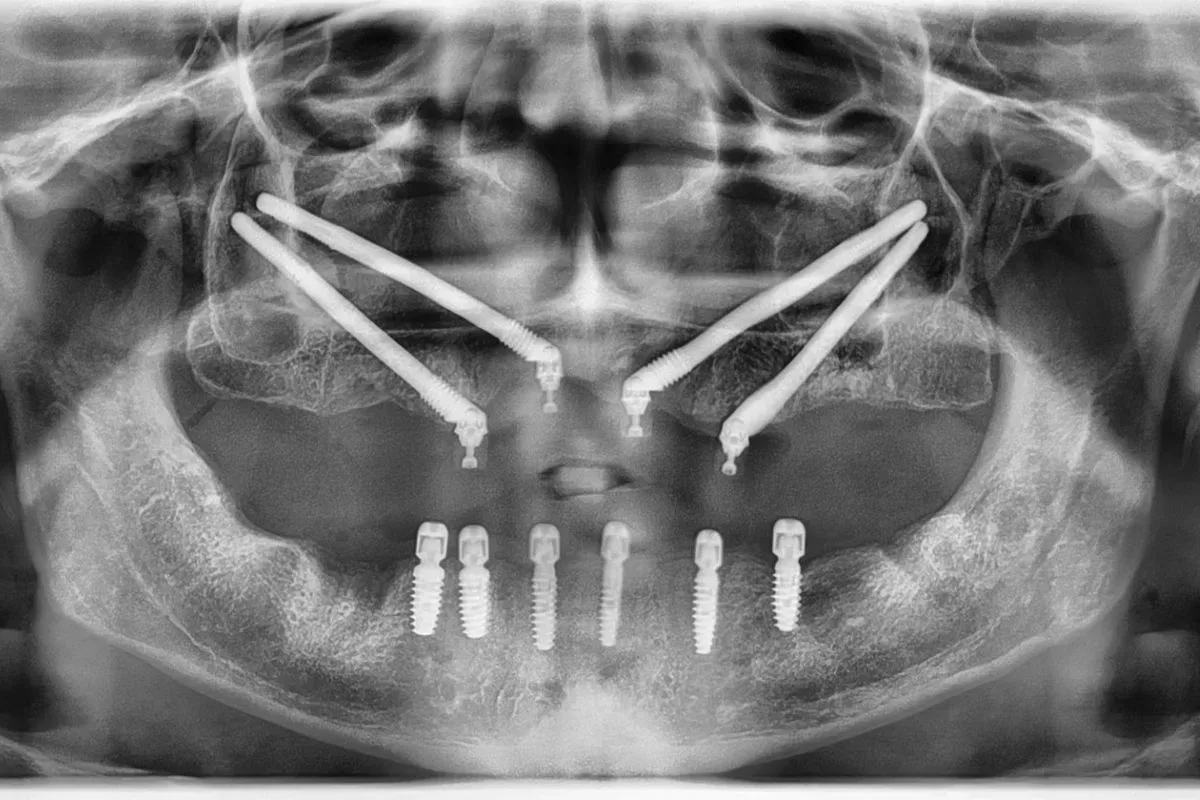
The answer to the question “How is an implant placed?” is easier to understand once you know that the treatment consists of several stages. In the first stage, a detailed oral examination is performed; the area of the missing tooth, gum health, and jawbone are evaluated. When necessary, the bone structure is examined using X-rays or CT scans. Based on this evaluation, a plan is developed for where, at what angle, and how the implant will be placed.
Once planning is complete, the implant procedure is typically performed under local anesthesia. During the procedure, the implant is placed into the jawbone at the site of the missing tooth. Depending on the patient’s condition, a temporary tooth may be placed on the same day, or a specific healing period may be allowed for the implant to integrate with the bone. During this period, the osseointegration of the implant with the jawbone is a critical step for the success of the treatment.
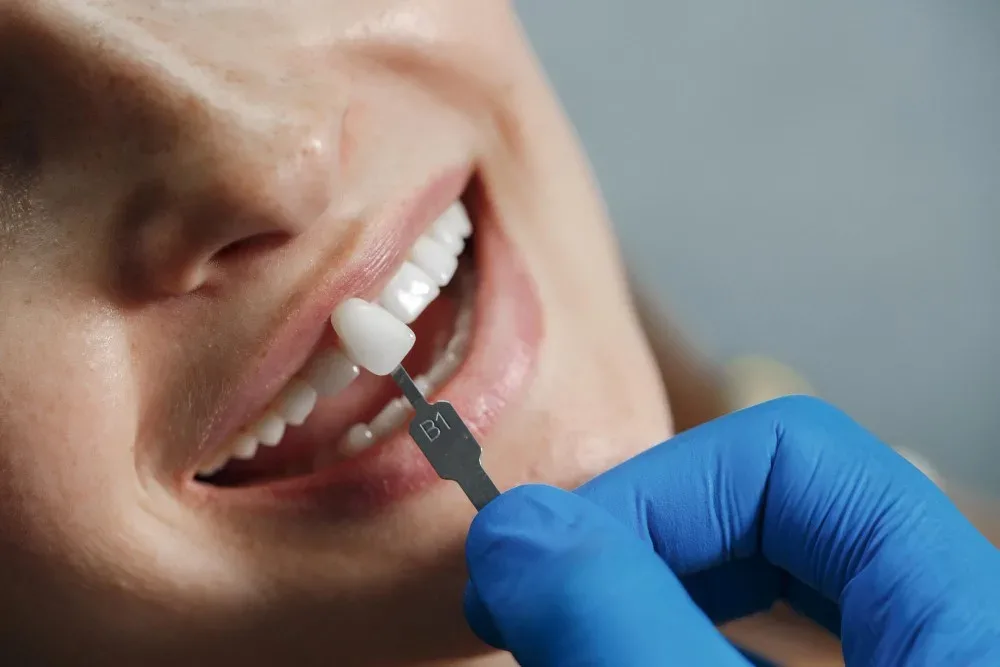
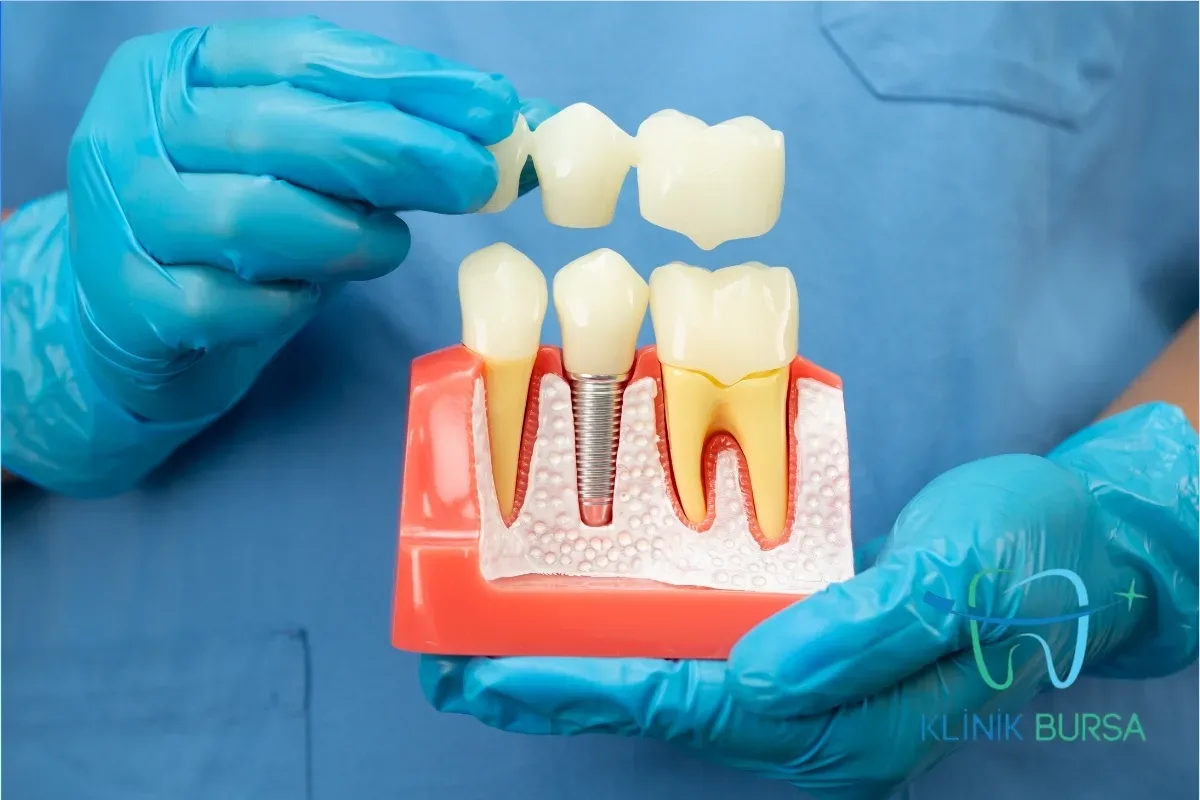
Once the healing period is complete, a prosthetic tooth, crown, or bridge is prepared to be placed on top of the implant. This superstructure is planned with consideration for tooth color, shape, occlusion, and chewing balance. Thus, implant treatment not only replaces the missing tooth but also helps the patient regain a natural appearance and more comfortable chewing function.
How Does the Implant Treatment Process Proceed?
The implant treatment process begins with a detailed evaluation of the patient’s oral structure. During the initial examination, the area of the missing tooth, gum health, jawbone structure, and overall oral health are assessed. When necessary, X-rays or CT scans are taken to assess bone density and bone volume in the area where the implant will be placed. This stage is crucial for planning the implant treatment correctly and safely.
Once planning is complete, the implant is placed. The implant is inserted into the jawbone at the site of the missing tooth, and the healing process begins. During this period, the implant is expected to integrate with the bone. Once healing is complete, the process moves on to the preparation of the permanent tooth to be placed on the implant. The prosthetic tooth is designed to match the patient’s oral anatomy, tooth color, and chewing pattern.
Implant treatment does not take the same amount of time for every patient. Bone quality, the number of missing teeth, the area where the implant will be placed, whether additional bone procedures are needed, and the patient’s overall oral health can all affect the treatment duration. For this reason, the implant treatment process should be planned on an individual basis, and each stage should proceed under the supervision of a dentist.
How Is the Implant Dental Restoration Process Planned?
Implant dentistry involves more than just placing the implant screw into the jawbone. An important stage of the treatment is the proper planning of the prosthetic tooth that will be placed on the implant. This superstructure is prepared according to the patient’s missing tooth area, bite relationship, chewing habits, and aesthetic expectations. The goal is to achieve a tooth that is both functionally effective and as close to a natural appearance as possible.
When planning the prosthetic tooth, its color, shape, size, and harmony with adjacent teeth are carefully evaluated. While aesthetic appearance takes on greater importance for implants placed in the front region, creating a structure resistant to chewing forces is a priority in the back regions. For this reason, the implant-supported tooth must not only look good but also maintain balance within the mouth.
Properly planned implant-supported tooth restoration supports the long-term success of implant treatment. It is important that the prosthesis does not place excessive load on the implant, ensures balanced force distribution during chewing, and is compatible with the gum tissue. At Klinik Bursa, when planning implant treatment, both the implant’s position within the bone and the aesthetic and functional compatibility of the tooth to be placed on it are evaluated together.
Post-Implant Healing Process
Post-implant healing refers to the process required for the implant to integrate with the jawbone and for the surrounding gum tissue to heal properly. After the implant is placed, the patient may experience mild pain, swelling, tenderness, or a sensation of pressure in the area. These symptoms are often a natural part of the healing process and can generally be managed by following the dentist’s recommendations.
The healing time varies from patient to patient. The patient’s bone structure, the location of the implant, the number of missing teeth, oral hygiene, and overall health can all influence this process. While some patients heal more quickly, in other cases it may be necessary to wait longer for the implant to fully integrate with the bone.
The timing of the placement of the permanent tooth is also determined by this healing process. Before a prosthetic tooth is placed on the implant, it is important for the implant to achieve sufficient stability and for the surrounding tissues to appear healthy. For this reason, regular post-implant checkups help ensure the treatment progresses safely.
Post-Implant Care Guidelines
Post-implant care directly affects the success of the treatment and ensures a comfortable healing process. In the first few days, it is important to avoid straining the implant site, to avoid hard and crunchy foods, and to avoid consuming very hot foods and beverages. Applying excessive pressure to the treated area while chewing can negatively affect the healing tissues.
Maintaining good oral hygiene is one of the most important steps in the post-implant period. Oral care should be performed as recommended by the dentist, prescribed medications should be taken regularly, and antibiotics or pain relievers should not be used without medical supervision. Since smoking can negatively affect the healing process, it should be avoided as much as possible, especially during the post-implant period.
It is important not to miss follow-up appointments to monitor the implant’s integration with the bone and the health of the surrounding tissues. If you experience pain, swelling, bleeding, bad odor, discharge, or significant discomfort in the implant area, you should contact your dentist. At Klinik Bursa, the post-implant follow-up process can be customized based on the patient’s healing progress.
How Long Do Dental Implants Last?
The lifespan of a dental implant can vary depending on how the treatment is planned, the patient’s oral hygiene habits, and the regular follow-up schedule. Properly planned and well-maintained implants can be used healthily for many years. However, the success of the procedure is not the only factor determining the implant’s lifespan; the patient’s daily oral hygiene, gum health, and overall health also play significant roles in this process.
Regular brushing, flossing, keeping up with dental checkups, and maintaining the health of the gum tissue surrounding the implant all contribute to the implant’s longevity. Teeth grinding, heavy smoking, uncontrolled gum disease, or inadequate oral hygiene, on the other hand, can negatively affect the tissues surrounding the implant. For this reason, the post-treatment care process is just as important as the treatment itself.
To ensure the implant remains healthy for a long time, the patient must visit the dentist for checkups at regular intervals. During these checkups, the bone and gum tissue surrounding the implant are evaluated, the fit of the prosthesis is examined, and preventive care procedures are performed as needed. At Klinik Bursa, the post-implant follow-up process can be customized for each patient to support the long-term health of the implant.
What Are the Advantages of Dental Implants?
The advantages of dental implants are important for patients with missing teeth from both a functional and aesthetic perspective. Implants provide a fixed solution to replace missing teeth, thereby supporting chewing comfort. They can offer a more stable feel compared to removable dentures and help patients feel more comfortable while eating or speaking in their daily lives.
Another key advantage of implant treatment is that the missing tooth area can be restored without the need to grind down adjacent healthy teeth. While traditional bridge procedures may require the reduction of adjacent teeth, implant treatment creates an independent support structure for the missing tooth area. This helps preserve the existing healthy teeth in the mouth.
From an aesthetic perspective, implant-supported teeth can be designed to closely resemble natural teeth. The tooth’s color, shape, and harmony with the gums are customized for each individual. Additionally, replacing a missing tooth can offer advantages in terms of ease of speech, chewing balance, and overall oral integrity. For this reason, implant treatment can be considered a long-term and comfortable solution for tooth loss in suitable patients.
What Should Be Considered for Implant Treatment in Bursa?
The first point patients considering implant treatment in Bursa should keep in mind is the need for a detailed evaluation before starting treatment. Implant treatment is not limited to simply placing a screw in the area of the missing tooth; the patient’s jawbone structure, gum health, number of missing teeth, bite relationship, and overall oral health must all be examined together. For this reason, when choosing a clinic, patients should ensure that the examination process is thorough and that the treatment is planned specifically for the individual.
The imaging methods used in dental implant treatment in Bursa are also crucial for planning. X-rays or, when necessary, CT scans allow for a clearer examination of the bone structure in the area where the implant will be placed. In addition, hygiene standards, the materials used, the dentist’s consultation process, and post-treatment follow-up appointments all contribute to the safe progression of implant treatment. It is important for the patient to clearly understand the process, the recovery period, and the precautions they need to take before treatment begins.
At Klinik Bursa, implant treatment can be customized to each patient’s specific oral anatomy, bone condition, gum health, and aesthetic expectations. The goal of the treatment process is not merely to replace a missing tooth, but to create a structure that supports chewing comfort, a natural appearance, and long-term oral health. For this reason, proper planning, regular follow-ups, and effective patient-dentist communication are of the utmost importance in implant treatment.