
Transparent Plaque Treatment
Crowding, spacing or slight bite problems can affect both aesthetic appearance and oral health. As a…
Read More
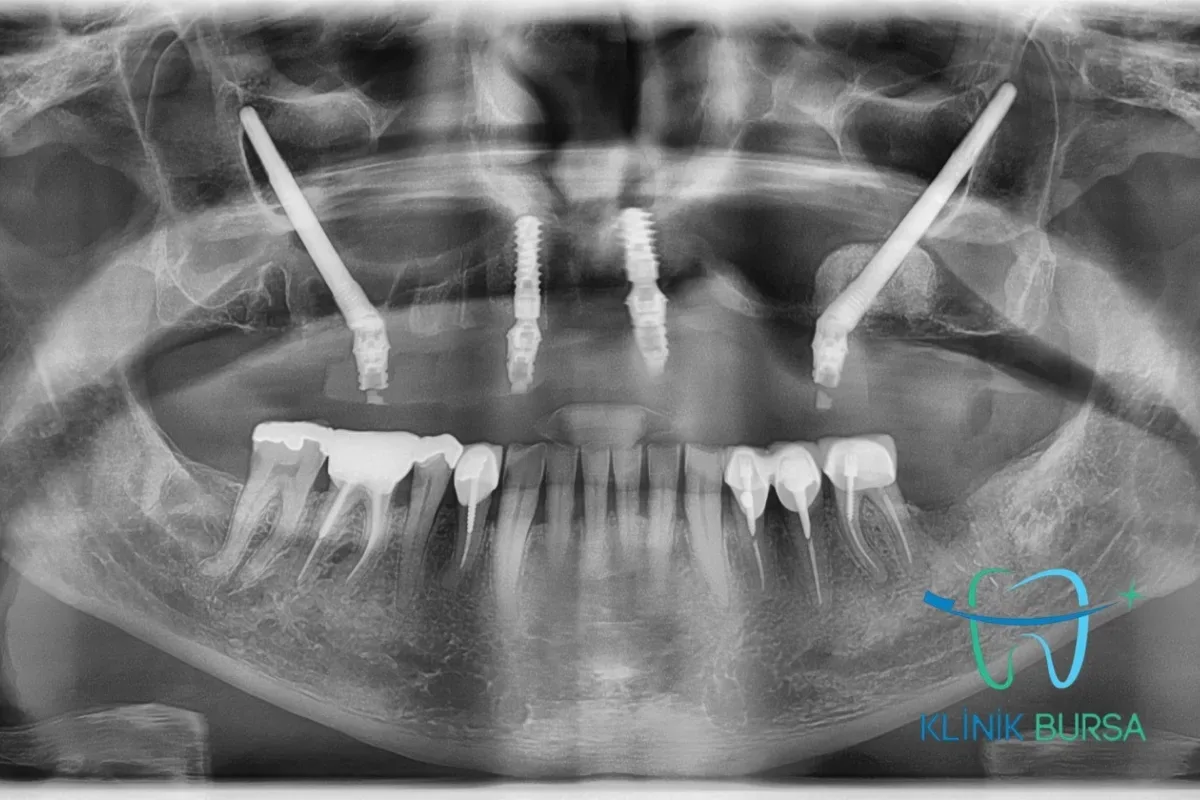
Classical implant treatment may not always be sufficient in patients with advanced bone loss in the upper jaw. In cases such as long-term toothlessness, bone resorption, failed implant history or insufficient upper jaw bone, more specialized implant solutions may be required. At this point, Zygoma Implant is one of the advanced implant treatments that can be considered especially for patients with severe bone loss in the upper jaw.
Also known as Zygomatic implant, this treatment, unlike classical implants, can be planned to receive support not only from the upper jaw bone, but also from the zygoma bone, which is a strong bone structure in the facial region. In this way, implant without bone graft or different fixed prosthesis options can be considered in some suitable patients. However, zygomatic implant is not suitable for every patient; jawbone, zygomatic bone structure, sinus anatomy and general oral health should be examined in detail.
In Clinic Bursa, Dr. Dt. Kerem Turgut Atasoy's patient-oriented approach, Zygoma Implant treatment is handled with detailed examination, advanced imaging and personalized planning. In this article, we will examine the topics that patients are most curious about, such as what is a zygomatic implant, who is suitable for, how to make a zygoma implant, how it differs from a normal implant, what should be considered in the treatment of Bursa zygoma implant, and what zygoma implant prices vary according to.
Zygoma Implant is an advanced implant treatment that can be evaluated in patients with advanced bone loss in the upper jaw and where classical implants cannot be applied due to insufficient bone support. This method can be considered especially in patients who have been toothless for a long time, who have developed severe resorption of the upper jaw bone or who have previously been told that there is not enough bone for implant treatment.
Zygomatic implant is also used to describe the same treatment group. While conventional implants are usually placed in the jawbone, zygomatic implants can be planned to be supported by the zygomatic bone, which can provide stronger support in the facial area instead of the upper jawbone. Therefore, the treatment requires a different and more detailed surgical planning than standard implant applications.
The aim of zygoma implant treatment is not only to complete missing teeth. It is aimed to support the use of fixed dental prosthesis, chewing function, aesthetic appearance and daily life comfort in patients with severe bone loss in the upper jaw. In Klinik Bursa, zygomatic implant evaluation is made in a personalized manner, taking into account the patient's jawbone structure, zygomatic bone condition and general oral health.
The question of What is a zygomatic implant is frequently researched, especially by patients who cannot have classical implants due to bone deficiency in the upper jaw. Zygomatic implants are special implants that can be evaluated in patients with severe bone loss in the upper jaw, long-term edentulism, a history of failed implants or advanced bone loss.
In patients who do not have sufficient bone volume for classical implants, zygomatic implant treatment can support fixed tooth prosthesis planning. In some suitable cases, this method can be considered as an alternative to advanced bone grafting procedures. However, this decision cannot be made in the same way for every patient; bone structure, sinus anatomy, oral hygiene and general health status should be examined together.
Zygomatic implant treatment is not a standard procedure applied to every patient. It requires detailed 3D imaging, advanced surgical evaluation and personalized prosthesis planning. For this reason, suitability for treatment must be determined after a dentist examination and comprehensive imaging.
The zygoma bone is one of the strong bone structures located in the cheekbone region of the face. This region, also known as Zygomatic bone, can be considered as an important support point in terms of implant treatment, especially in patients with severe insufficiency in the upper jaw bone.
Unlike classical implants in zygoma implant treatment, support can be obtained not only from the upper jaw bone but also from the zygoma bone. This may offer an alternative to fixed dental prosthesis planning in some patients whose upper jaw bone is not sufficient for implants. However, since this treatment requires advanced surgical planning, detailed examination and imaging are essential.
Each patient has a different zygomatic bone structure, sinus anatomy and upper jaw bone condition. For this reason, zygoma implant planning is not done in a standardized way; a personalized treatment plan is created by evaluating the patient's bone structure, oral health and prosthesis needs together.
Bone loss in the upper jaw can develop as a result of long-term toothlessness, gum diseases, bone resorption, trauma or previous unsuccessful treatments. When bone volume decreases, especially in the posterior region of the upper jaw, it can be difficult to place conventional implants securely.
Patients with high bone loss may sometimes require bone grafting, sinus lifting or other surgical procedures for implant treatment. However, in suitable patients with advanced bone deficiency, Zigoma Implant is one of the advanced options that can be considered for upper jaw fixed dental treatment.
The aim of this treatment is to create a plan that can support chewing function, aesthetic appearance and daily life comfort in patients who have lost hope for fixed teeth due to bone loss. At Klinik Bursa, patients with upper jaw bone loss are handled with detailed imaging and personalized evaluation.
Whether implant treatment is possible in jaw bone insufficiency depends on the patient's bone structure and the missing tooth area. Not every patient with bone loss is evaluated in the same way. For this reason, the height, width and quality of the jawbone should be examined by detailed examination, X-ray or 3D imaging for suitability for implant treatment.
Some patients may require bone grafting, sinus lifting or other surgical support procedures to create sufficient bone support for the implant. However, in suitable patients with severe bone loss in the upper jaw, the Zygoma Implant may be an advanced treatment option that can be considered as an alternative to conventional implants.
The treatment decision must be made individually. The most accurate implant plan is created by evaluating the patient's jawbone structure, zygoma bone condition, sinus anatomy, oral hygiene, general health status and fixed prosthesis expectation together.
Implant treatment in patients with bone resorption is planned according to the level and location of bone loss. Especially in patients who have been toothless for a long time, the jawbone may lose volume over time. This can make it difficult to place conventional implants and may require more detailed treatment planning.
In patients with limited bone loss, implant treatment can be planned with supportive procedures such as bone grafting or sinus lifting. However, in some patients with advanced bone loss in the upper jaw, the zygomatic implant option can be considered as an advanced solution that can help with fixed prosthesis planning.
However, the zygomatic implant is not suitable for every patient with osteoporosis. General health status, oral hygiene, bone structure, zygoma bone condition and prosthesis expectation should be evaluated together. At Klinik Bursa, this process is handled with detailed imaging and personalized implant planning.
Implant without bone graft may be possible in some patients; however, this depends entirely on the patient's bone structure and implant plan. Bone grafting may not always be the only option, especially in patients with severe bone deficiency in the maxilla. In some suitable cases, zygomatic implant treatment can be considered as an alternative method that can reduce the need for bone grafting.
Unlike classical implants, zygomatic implants can be planned to receive support from the zygoma bone, which can provide stronger support instead of the upper jaw bone. Therefore, it can offer a different solution for fixed prosthesis planning in some patients with severe bone loss in the upper jaw. However, this treatment requires detailed imaging and advanced surgical planning.
"Implant without bone graft" does not apply to every patient. A clear decision cannot be made without evaluating the patient's jawbone condition, zygomatic bone structure, sinus anatomy, oral hygiene and general health. Therefore, the best treatment option should be determined after a personalized examination and 3D imaging.
Zygoma Implant is an advanced implant treatment that can be evaluated in patients with advanced bone loss in the upper jaw, who do not have sufficient bone support for classical implants or who have been toothless for a long time. It can be an alternative option in suitable cases for patients who do not want to use removable prosthesis and want fixed dental prosthesis.
This treatment comes to the agenda especially in cases where classical methods are not sufficient in upper jaw implant treatment. However, not every patient with bone loss is suitable for zygoma implant. In some patients, bone grafting, sinus lifting or different implant plans may be more appropriate.
For suitability, 3D imaging, jawbone and zygoma bone evaluation, sinus structure, oral hygiene, general health status and prosthesis planning should be examined together. At Klinik Bursa, zygoma implant suitability is evaluated by Dr. Dt. Kerem Turgut Atasoy's patient-oriented approach after a detailed evaluation.
The answer to the question of how a zygoma implant is performed depends on the patient's upper jaw bone structure and treatment needs. In the first stage, a detailed examination is performed; the patient's oral health, tooth deficiency status, jawbone structure and fixed prosthesis expectation are evaluated. Then, the maxilla, sinus area and zygoma bone are analyzed in detail with 3D imaging.
In the planning phase, the angle at which the implants will be placed and from which area they will be supported is determined. Zygoma implants are longer than conventional implants and require special planning. For this reason, both the implant position and the subsequent fixed prosthesis design should be carefully planned before the surgical procedure.
During the surgical procedure, zygoma implants are placed in accordance with the patient's anatomical structure. The healing process and prosthesis phase progresses according to the patient's treatment plan. In Klinik Bursa, zygoma implant treatment is handled individually with detailed evaluation, correct planning and patient-oriented approach.
Upper jaw implant treatment may require more detailed evaluation in some patients compared to the lower jaw. Because bone structure, sinus cavities and bone reduction due to long-term tooth loss in the upper jaw may affect implant planning. Especially if the bone volume is insufficient in the posterior region of the upper jaw, placement of classical implants may become difficult.
In such cases, Zygoma Implant can be considered as an advanced solution that can support fixed dental prosthesis planning in suitable patients with advanced bone loss in the upper jaw. In some patients, support from the zygoma bone can provide an alternative to fixed prosthesis plans that are not possible with classical implant methods.
However, not every upper jaw implant case requires a zygoma implant. In some patients, different treatment options such as classical implants, sinus lifting or bone grafting may be more appropriate. The best treatment plan should be determined by evaluating the jawbone structure, sinus anatomy, oral health and patient expectations together.
Zygoma Implant is one of the advanced implant treatment options that require more complex planning than standard implant treatments. It is especially considered in patients with severe bone loss in the upper jaw and insufficient bone support for a classical implant. For this reason, detailed examination, 3D imaging and individualized surgical planning are required before treatment.
The aim of this treatment is not only to place implants. The aim is to create a comprehensive treatment plan that supports the patient's chewing function, fixed prosthesis use, aesthetic expectations and long-term oral health. Zygoma implant treatment can be an important alternative for some patients who cannot use fixed dentures due to upper jaw bone insufficiency.
Not all patients may be suitable for zygoma implants. The patient's jawbone condition, zygoma bone structure, sinus anatomy, oral hygiene, general health status and prosthesis expectation should be evaluated together. Advanced implant treatments at Klinik Bursa are handled with detailed analysis and personalized planning according to the needs of the patient.
The main difference between a zygoma implant and a normal implant is the bone structure that the implant supports. While normal implants are usually placed in the jawbone, zygoma implants can be planned to support the zygoma bone when there is not enough bone support in the upper jaw. Therefore, the zygoma implant is a treatment option that requires more specialized and advanced surgical planning.
Normal implant treatment can be applied in patients with sufficient jaw bone. However, if there is advanced bone loss, long-term toothlessness or bone resorption in the upper jaw, placement of conventional implants may become difficult. In such cases, zygomatic implant treatment can be considered as one of the alternatives that can support fixed dental prosthesis planning in suitable patients.
Which method is more appropriate is determined according to the patient's bone structure, tooth deficiency, prosthesis expectation and general oral health. Therefore, whether a normal implant or a zygoma implant is preferred should be planned individually after a detailed examination and imaging.
Those Who Get Zygoma Implants should know that the process requires more detailed planning than classical implant treatments before starting treatment. Therefore, a detailed examination, 3D imaging, jawbone and zygoma bone evaluation should be performed in the first stage. The treatment plan should be created not only according to the placement of the implants, but also according to the fixed prosthesis design to be prepared afterwards.
For those who have zygoma implants, the post-procedure follow-up process is as important as surgical planning. Keeping follow-up appointments, paying attention to oral hygiene, following the physician's recommendations and regular follow-up of the prosthesis use process supports long-term success. Since each patient's bone structure, healing process and prosthesis needs are different, the treatment process is individualized.
Patient comments and treatment experiences can provide insight; however, they should not be the sole decision-making criteria. A treatment plan that is suitable for one patient may not be applied in the same way in another patient. Therefore, the best decision in zygoma implant treatment should be made after a detailed examination and personalized evaluation.
Although price is an important issue for patients seeking Bursa zygoma implant treatment, it should not be the only decision criterion. Since the zygoma implant is an advanced implant treatment evaluated in patients with advanced bone loss in the upper jaw, the physician's evaluation, 3D imaging process, surgical planning and prosthesis design are of great importance.
In the treatment process, sterilization conditions, implant system to be used, fixed prosthesis plan, chewing balance and regular follow-up after the procedure should be considered. Zygoma implant treatment is not only a surgical procedure; the whole process should be planned together so that the patient can use a comfortable, healthy and aesthetic fixed tooth in the long term.
Zygoma implant treatment at Clinic Bursa is provided by Dr. Dt. Kerem Turgut Atasoy's patient-oriented approach with detailed evaluation and personalized planning. The aim is to create a reliable treatment process that supports chewing function, fixed prosthesis use, aesthetic appearance and long-term oral health in patients with advanced bone loss.
Zygoma implant prices are not determined in the same way for every patient. Because the level of bone loss in the upper jaw, the number of implants needed, the implant system to be used, the prosthesis plan and additional treatment requirements may vary from person to person. For this reason, a detailed examination and 3D imaging should be performed first for clear price information.
Factors affecting the price include surgical planning, the need for single jaw or double jaw treatment, fixed prosthesis material, temporary prosthesis requirement, laboratory process and control appointments. In addition, the patient's oral health, sinus anatomy, zygoma bone structure and previous treatments can also affect the planning.
Therefore, it is not correct to make a price-oriented decision only in zygoma implant treatment. Since the treatment requires advanced surgical planning, safe evaluation, correct implant positioning, prosthesis design and regular follow-up are important for long-term success.
The aim of Zygoma Implant treatment in Clinic Bursa is not only to complete missing teeth. It is aimed to create a comprehensive treatment plan that supports chewing function, fixed tooth use, aesthetic appearance and long-term oral health in patients with advanced bone loss in the upper jaw.
Zygoma implant treatment is an advanced treatment process that requires more detailed evaluation than classical implant applications. Therefore, jawbone structure, zygoma bone, sinus anatomy, oral hygiene, general health status and prosthesis need should be evaluated together.
Dr. Dt. Kerem Turgut Atasoy founded Klinik Bursa, zygoma implant treatment is handled with detailed imaging, personalized planning and patient-oriented approach. The aim is to provide a natural-looking, functional and comfortable fixed dental treatment that the patient can use comfortably in daily life.
Zygoma implant is an advanced implant treatment that can be planned with the support of zygoma bone in cases where classical implants cannot be placed in patients with severe bone loss in the upper jaw. It can be considered for fixed tooth prosthesis planning, especially in patients with insufficient upper jaw bone.
Zygoma implant may be suitable for patients with advanced bone loss in the upper jaw, who do not have sufficient bone support for classical implants or who have been toothless for a long time. However, detailed examination, 3D imaging and personalized implant planning are required for suitability.
First, the jawbone, sinus area and zygoma bone are evaluated in detail. Then a personalized implant plan is prepared and implants are surgically placed in the zygoma. The prosthesis process proceeds according to the patient's healing condition and treatment plan.
While normal implants are usually placed in the jawbone, zygoma implants can be planned to support the zygoma bone when the upper jawbone is insufficient. Therefore, zygoma implant is a treatment that requires more advanced surgical planning and detailed imaging.
Zygoma implant prices vary according to the number of implants, level of bone loss, implant system used, prosthesis material, imaging process and personalized treatment plan. For the exact price, an evaluation should be made after detailed examination and 3D imaging.
Crowding, spacing or slight bite problems can affect both aesthetic appearance and oral health. As a…
Read More
When tooth loss occurs in the posterior maxillary region, bone height may decrease over time and the…
Read More
Zirconium Dental Veneers are one of the most preferred veneer options for patients who want to have…
Read More
Aesthetic and healthy teeth are one of the most important elements that directly affect a person's s…
Read MoreContact us today to schedule your appointment.



Klinik Bursa, dişe dokunur...