Transparent Plaque Treatment
Crowding, spacing or slight bite problems can affect both aesthetic appearance and oral health. As a…
Read More
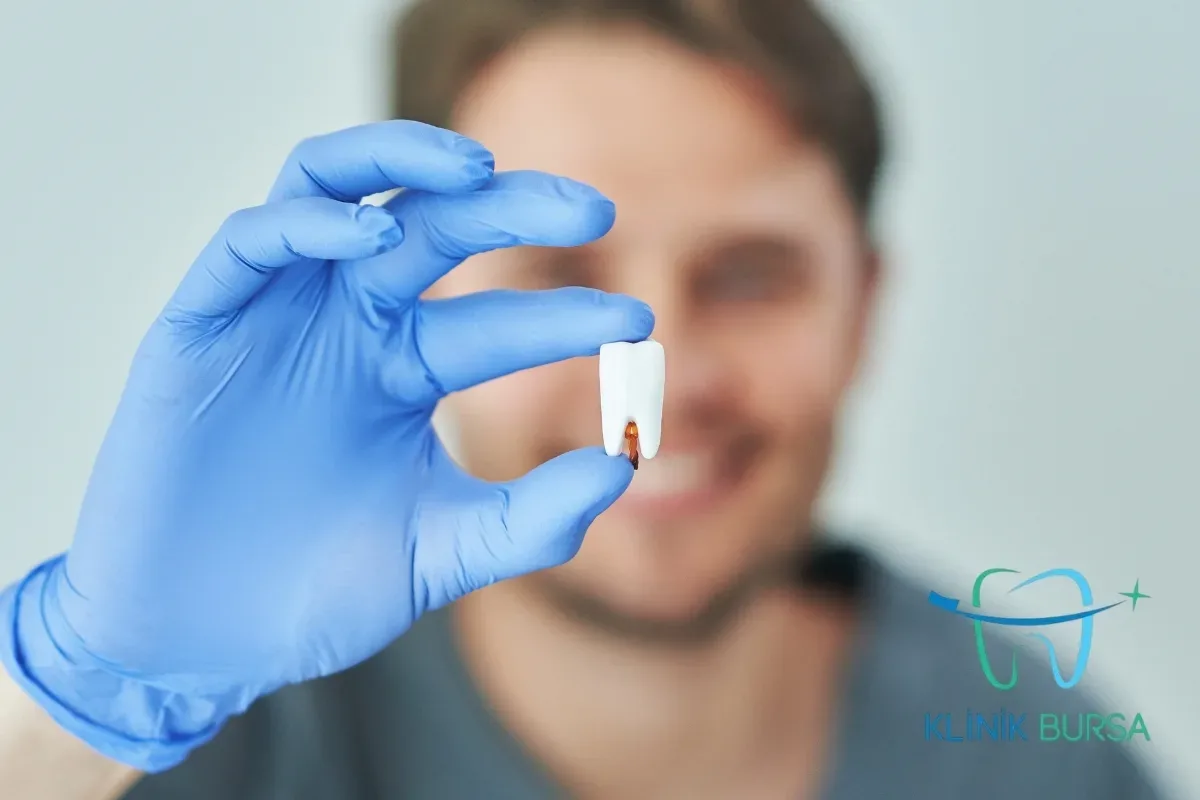
Dental extraction in Bursa is a dental treatment that may be needed for different reasons such as tooth decay, infection, fracture, gum disease, impacted teeth or lack of space in the mouth. Although tooth preservation is always the primary goal, in some cases, extraction may be the best option to protect oral and dental health. Especially in teeth that cause pain, damage neighboring teeth or carry a risk of infection, timely intervention is important.
When tooth extraction is researched in Bursa region, one of the issues that patients are most curious about is whether the procedure is painful or not, the healing process after extraction, eating patterns, bleeding and swelling. Today, thanks to local anesthesia and proper planning, tooth extraction can be performed comfortably for most patients. In procedures such as wisdom tooth extraction, impacted tooth extraction or surgical tooth extraction, the treatment process is planned individually according to the location of the tooth and the patient's oral structure.
The tooth extraction process at Klinik Bursa is planned by evaluating it with detailed examination and necessary imaging methods. The aim is not only to extract the problematic tooth, but also to make the patient feel safe before and after the procedure. In this article, we will discuss in detail in which cases tooth extraction is necessary, wisdom and impacted tooth extraction processes, things to be considered after tooth extraction and the main factors affecting the prices for patients who are searching for tooth extraction prices Bursa.
Dental extraction is a procedure that is usually applied after evaluating treatment options to save the tooth. If the tooth can be kept healthy in the mouth with fillings, root canal treatment, gum treatment or restorative applications, the priority is always to preserve the tooth. However, in some cases, extraction may become inevitable when the tooth starts to damage the surrounding tissues or poses a risk of infection. For this reason, dental extraction in Bursa should be evaluated individually according to the patient's complaints, x-ray findings and general oral health.
It may be necessary to extract teeth that are severely decayed, mostly broken or with damaged root structure. Especially in cases where the infection progresses to the root of the tooth, causing pain and abscess, keeping the tooth in the mouth can both reduce the patient's quality of life and negatively affect the surrounding healthy teeth. One of the most common reasons for patients searching for Bursa caries tooth extraction is that the decay has reached a level that can no longer be repaired with filling or root canal treatment.
Tooth extraction; It can also be applied in teeth that shake due to advanced gum diseases, in cases where space needs to be made in the mouth before orthodontic treatment, in embedded or incorrectly positioned teeth. In some patients, not only the visible part of the tooth but also the root area may cause problems. In such cases, root tooth extraction is planned according to the root structure of the tooth and the surrounding bone tissue. Detailed examination, panoramic x-ray if necessary and clinical evaluation of the physician are of great importance for the right decision.
The first step before tooth extraction is a detailed evaluation of the patient's oral and dental structure. While the physician checks whether the tooth is decayed, broken, infected or loose, he also examines the gum health, surrounding teeth and the general oral structure of the patient.
If needed during the examination, X-ray or panoramic imaging methods are used. Thanks to these images, the shape of the tooth roots, the position of the root in the bone, the surrounding bone tissue and the proximity to the nerves can be evaluated more clearly. This planning process is especially important for teeth with curved root structures, teeth that have not completely erupted or teeth that remain in the bone. Thus, before the procedure, it can be determined whether the extraction will be performed within the scope of simple or surgical tooth extraction.
The tooth extraction process at Klinik Bursa is planned individually, taking into account the patient's current complaints, oral structure and general health status. Details such as the use of blood thinners, chronic diseases, previous dental treatment experiences and pain sensitivity should be shared with the physician. This information helps to increase patient comfort during the procedure and helps the post-extraction healing process to proceed in a more controlled manner.
Before starting the tooth extraction procedure, the area to be extracted is numbed with local anesthesia. In this way, the patient does not feel pain during the procedure; they may only feel slight pressure, contact or movement. While creating the treatment plan in Dental extraction Bursa, the application of anesthesia is done carefully according to the location of the tooth and the sensitivity of the patient. Once numbness is achieved, the physician performs the extraction by moving the tooth in a controlled manner without damaging the surrounding tissues as much as possible.
Simple tooth extraction is usually applied to teeth that are visible in the mouth and have a suitable root structure. The tooth is loosened and removed with special dental instruments. However, in some cases, only the root part of the tooth may remain or the tooth may be broken, decayed or have a sensitive structure. In such cases, root tooth extraction requires more careful planning. The aim is to safely remove the tooth root and promote healthy healing of the extraction site.
If the tooth is impacted, the roots are in a difficult position in the bone or cannot be removed by normal methods, surgical extraction may be necessary. In surgical extraction, the gum tissue can be opened in a controlled manner to reach the tooth and, if necessary, the tooth can be separated into pieces and removed. After the procedure, the area is cleaned, bleeding is controlled and stitches are applied if necessary. When the physician's recommendations are followed, the healing process after tooth extraction usually proceeds in a controlled and comfortable manner.
Wisdom teeth are the last molars to erupt in the mouth and do not need to be extracted in every patient. If the wisdom tooth erupts in the correct position, contributes to chewing function and does not damage the surrounding teeth, it can be kept under follow-up. However, in cases such as pain, recurrent infection, gingival swelling, jaw stenosis, difficulty in opening the mouth or pressure on the neighboring tooth, wisdom tooth extraction can become an important treatment option for patients in Bursa.
Before wisdom tooth extraction, the position of the tooth in the mouth and the root structure are evaluated in detail. If the tooth is completely extracted, simple extraction method can be applied; however, if part of the tooth is under the gum or embedded in the bone, surgical procedure may be required. X-ray imaging is especially important for impacted or semi-impacted wisdom teeth in order to understand the proximity of the tooth to the nerves and neighboring teeth. Thanks to this evaluation, the procedure can be planned in a safer and more controlled manner.
After the procedure, patients may experience mild pain, tenderness or swelling. Pain after wisdom tooth extraction can usually be controlled with medications and care instructions recommended by the physician. Swelling after wisdom tooth extraction may be more pronounced in the first few days, especially in surgical extractions, and decreases over time. In this process, not straining the extraction site, avoiding hot food and drinks and following the doctor's recommendations will help the healing progress more comfortably.
An impacted tooth is a tooth that cannot fully erupt to the position it should be in the mouth and remains under the gum or bone tissue. Although this condition is most common in wisdom teeth, it can also occur in different teeth. Extraction may be necessary if the direction of the tooth's exit is distorted, if there is not enough space in the jaw, or if the tooth is pressing on the neighboring tooth. , the position of the tooth, root structure, its relationship with bone and its effect on surrounding tissues are carefully examined.
Simple tooth extraction is applied to teeth that are visible in the mouth and can be removed directly with special dental instruments. However, in order to reach the tooth in impacted teeth, it may sometimes be necessary to open the gum tissue, to organize the bone tissue in a controlled manner or to remove the tooth by separating it into pieces. For this reason, imbedded wisdom tooth extraction is a procedure that often requires more detailed planning than a standard extraction.
Surgical tooth extraction is a more comprehensive extraction method applied when the tooth cannot be removed by normal methods. Not all surgical extractions can be performed for impacted teeth; broken roots, teeth that have broken down due to advanced decay or difficultly positioned root structures may also require surgical extraction. The important point for patients is that the difficulty of the procedure is determined by X-ray findings and the physician's examination rather than the appearance of the tooth. With proper planning, both the procedure and the healing period progress more controlled.
Mild pain, tenderness and a feeling of pressure in the area after tooth extraction are considered normal for most patients. Especially after the effect of anesthesia wears off, a tingling discomfort may occur in the extraction area. Pain after tooth extraction can usually be controlled with painkillers recommended by the physician and proper care practices. However, the pain is expected to decrease day by day; in case of pain that becomes severe, throbbing or does not go away for several days, a physician should be consulted.
Bleeding after tooth extraction may also be mild in the first hours. Biting the gauze placed after the procedure for the period recommended by the physician helps to control bleeding. Frequent spitting, rinsing the mouth, using a straw or poking the extraction site with the tongue may cause the clot to break down. If bleeding continues for a long time, intensifies or the clot formation is disrupted, a dentist should be consulted immediately.
Swelling after tooth extraction can be seen especially after surgical extractions, impacted tooth extractions and wisdom tooth extractions. It may be normal for swelling to increase in the first 24-48 hours; then it is expected to decrease gradually. However, if the swelling is getting bigger, accompanied by bad odor, bad taste, fever, intense pain or significant difficulty in opening the mouth, this may be a sign of infection or healing problems. In such a case, it is the best approach to consult a physician instead of waiting at home.
The first few hours after tooth extraction are very important in terms of healthy clot formation at the extraction site. For this reason, food should not be eaten until the numbness subsides and hot food and drinks should be avoided.
Using straws, smoking, frequent spitting or mouth rinsing in the post-extraction period may cause the clot to dislodge. This can both increase bleeding and negatively affect the healing process. Care should be taken not to use the side where the extraction was performed, to consume food slowly and not to force the area, especially when eating after 20 tooth extraction. Avoiding very hot coffee, tea, spicy foods and acidic drinks on the first day provides a safer healing process.
The process of returning to daily life may vary depending on whether the extraction was simple or surgical. For the first 24 hours, it is recommended to avoid heavy exercise and situations that may increase body temperature such as hot baths or saunas. Medications prescribed by the physician should be used regularly and oral hygiene instructions should be followed. During the healing process after tooth extraction, it is best not to tamper with the extraction site with the tongue, fingers or hard objects; it is the best approach to protect the clot formed and to consult a physician if there is an increase in complaints.
The recovery process after tooth extraction may vary depending on the location of the extracted tooth, whether the procedure is simple or surgical, and the patient's oral care. For simple extractions, the initial recovery is usually faster, whereas for impacted teeth or surgical extractions, the recovery may be more delicate for a few days. The first 24 hours are the most critical period for a healthy clot to form. During this period, it is important to control bleeding, protect the extraction site, avoid hot foods and follow the doctor's recommendations.
Mild pain, tenderness and swelling may occur in the first few days. These symptoms may be more pronounced especially after wisdom tooth or impacted tooth extractions. Pain after wisdom tooth extraction is usually controlled with the medication recommended by the dentist and is expected to subside within a few days. Swelling after wisdom tooth extraction usually becomes more pronounced in the first 48 hours and then gradually begins to subside. During this period, not straining the area, consuming soft foods and paying attention to oral hygiene support healing.
At the end of the first week, pain and swelling are significantly reduced in many patients; stitches, if any, are checked or removed according to the physician's planning. Complete closure of the extraction cavity may take longer and this process may vary from person to person. During the full recovery period, it is important that the patient refrains from smoking, does not tamper with the extraction site and does not miss follow-up appointments. In cases such as increased pain, bad odor, bad taste, prolonged bleeding or swelling, a dentist should be consulted.
When researching tooth extraction prices in Bursa, it should be known that the price may not be the same for every patient. Because tooth extraction is a procedure that varies according to the location of the tooth in the mouth, root structure, infection status and whether the extraction is performed by simple or surgical method. The extraction of a tooth that is completely visible and easily accessible in the mouth and the extraction of an impacted tooth under the bone or gum are not considered in the same context.
One of the most important factors affecting the price is the degree of difficulty of the procedure. While the process is usually shorter and standardized in simple tooth extractions, implanted tooth extraction may require more detailed examination, x-ray evaluation and surgical planning in Bursa. The proximity of the tooth to the nerves, the shape of the roots, the bone structure, whether stitches are needed during extraction and the need for post-procedure control can also affect the price.
In order to provide clear price information for tooth extraction Bursa, the patient must first be examined. In some cases, only extraction is sufficient, while some patients may require infection treatment, medication, x-ray imaging or different treatment plans after extraction. For this reason, the most accurate price information is determined after the condition of the tooth is evaluated and a personalized treatment plan is created.
The process of tooth extraction in Clinic Bursa starts with listening to the patient's complaints and a detailed oral examination. Whether the tooth is suitable for extraction, the condition of the surrounding tissues, any signs of infection and the general oral health of the patient are evaluated together. One of the most important issues for patients researching in the Dental extraction Bursa region is that the procedure should be done with the right planning without being rushed. For this reason, tooth roots and bone structure are examined in detail with X-rays or panoramic imaging when necessary.
When creating the treatment plan, the patient's comfort, pain control during the procedure and the healing process after extraction are taken into consideration. While the process may be shorter in simple tooth extractions, the position of the tooth, whether it is impacted or not, and its effect on neighboring teeth are carefully analyzed in cases evaluated within the scope of 20 tooth extraction Bursa. If the tooth cannot be safely removed by normal methods, the procedure can be planned as surgical tooth extraction.
A sterile working environment, personalized approach and post-procedure information are important parts of the process at Clinic Bursa. The patient is clearly explained what to pay attention to after the extraction, which conditions are considered normal and which symptoms should be referred to a doctor. Thus, the patient feels safer not only during the procedure but also during the recovery period.
The area to be treated is numbed with local anesthesia before tooth extraction. Therefore, the patient does not feel pain during the extraction. There may only be a feeling of pressure, movement or slight pressure during the procedure. Mild pain that may occur after the effect of anesthesia wears off can be controlled with the medications and care instructions recommended by the physician.
Mild bleeding or pink-colored leakage mixed with saliva can be considered normal in the first hours after tooth extraction. Biting the gauze placed by the physician for the recommended period helps to control the bleeding. If the bleeding increases, does not stop for a long time or the clot continuously breaks down, the dentist should be consulted.
For eating after tooth extraction, you should first wait for the numbness to pass. Eating while numbness persists may cause unintentional biting of the lips, cheeks or tongue. On the first day, warm, soft foods that will not strain the extraction area should be preferred. Avoiding very hot, hard, spicy, spicy, granular foods and the use of straws is important for the healing process.
The degree of difficulty of wisdom tooth extraction varies according to the position of the tooth, whether it is impacted or not, root structure and its relationship with surrounding tissues. A wisdom tooth that has erupted properly in the mouth can be removed with simple extraction, while an impacted or semi-impacted tooth may require surgery. For this reason, the most accurate evaluation is made after examination and X-ray imaging.
Dental extraction prices in Bursa may vary according to the location of the tooth, whether the extraction is simple or surgical, the condition of the impacted tooth, the need for X-rays and whether additional treatment is required. The scope of the procedure may differ in cases such as broken root, infection, impacted wisdom tooth or surgical tooth extraction. For this reason, a dentist examination is required for clear price information.
Crowding, spacing or slight bite problems can affect both aesthetic appearance and oral health. As a…
Read More
When tooth loss occurs in the posterior maxillary region, bone height may decrease over time and the…
Read More
Zirconium Dental Veneers are one of the most preferred veneer options for patients who want to have…
Read More
Aesthetic and healthy teeth are one of the most important elements that directly affect a person's s…
Read MoreContact us today to schedule your appointment.



Klinik Bursa, dişe dokunur...