Transparent Plaque Treatment
Crowding, spacing or slight bite problems can affect both aesthetic appearance and oral health. As a…
Read More
Children's oral and dental health directly affects not only their dental problems today, but also their dental development and oral health habits in later years. For this reason, Pediatric Dentistry is an important field of dentistry that aims to protect children's teeth from infancy to adolescence, to recognize cavities early and to plan the necessary treatments in accordance with the age of the child.
What is Pedodontics is one of the most curious topics for parents. Pedodontics is the field that deals with children's deciduous teeth, permanent tooth development, oral hygiene, caries risk, dental trauma and preventive dental treatments. If tooth decay, deciduous tooth problems, toothache, broken tooth, tooth filling or emergency dental problems in children are evaluated early, more comfortable and protective treatment processes can be planned.
In Clinic Bursa, Dr. Dt. Kerem Turgut Atasoy's patient-oriented approach, Pediatric Dentistry services are evaluated according to children's age, oral structure and compliance with treatment. In this article, we will examine the topics that parents are most curious about such as what pediatric dentistry is, when children should go to their first dentist examination, which treatments the pediatric dentist performs, what should be considered during the Bursa pediatric dentistry process and how to prevent tooth decay in children.
Pediatric Dentistry is a field of dentistry that includes protecting the oral and dental health of children from infancy to adolescence, recognizing dental problems at an early stage and planning the necessary treatments in accordance with the age of the child. In this process, the aim is not only to treat existing dental problems, but also to support the child to gain healthy oral care habits.
What is Pedodontics is directly related to this issue. Pedodontics is the field of pediatric dentistry that evaluates children's deciduous teeth, permanent tooth development, jaw structure, oral hygiene, eating habits and tooth decay risk. Early controls in children can help prevent bigger dental problems that may occur in the future.
Pediatric dentistry should be planned according to the child's age, dental development and compliance with the treatment. While evaluating the oral and dental health of pediatric patients at Klinik Bursa, both the comfort of the child and the correct information of the parents are prioritized.
Pediatric dentist deals with tooth decay, deciduous tooth problems, toothache, tooth fracture, tooth filling, root canal treatment, tooth extraction and preventive dentistry applications in children. In addition, the development of oral hygiene habits in children, tooth brushing training and reducing the risk of caries are also important parts of this field.
The term children's dentist, which is frequently searched by parents, is usually used in the sense of pediatric dentist. Dental treatment of children requires a different approach than adult patients. Because in the treatment process in children, not only the dental problem, but also the child's age, anxiety, communication and dentist experience should be taken into consideration.
Therefore, reassuring, patient and age-appropriate communication is very important in pediatric dentistry. At Klinik Bursa, the treatment process of pediatric patients is planned in a way to help the child feel safe and adapt to the treatment more easily.
The first dental examination of children should be planned in the early period when the first teeth usually begin to erupt. This check-up should not be considered as an examination that should be done only when there is a problem with the teeth. Evaluations made at an early age help to form the child's oral and dental health habits in the right way.
In the first examination, the development of milk teeth, tooth eruption process, oral hygiene, eating habits and caries risk can be evaluated. Parents are informed about tooth brushing, nutrition and oral care appropriate for the child's age. Thus, possible dental problems can be recognized at an early stage before they progress.
The child's early acquaintance with the dentist can help reduce the development of fear of the dentist in the future. At Klinik Bursa, children's first dental examination is carried out with a calm, explanatory and reassuring approach.
Dental treatment in children is planned according to the child's age, tooth development, deciduous or permanent tooth status, depth of decay, pain complaint and compliance with treatment. Not all children are evaluated in the same way because their oral structure, communication and approach to treatment may be different.
The aim of treatment planning is not only to solve the existing dental problem. It is also aimed to protect the oral health of the child, reduce the risk of caries and prevent bigger problems that may occur in the future. Therefore, filling, root canal treatment, deciduous tooth treatment, extraction or preventive applications are evaluated according to the needs of the child.
It is important that the child completes the process without developing fear of the dentist during the treatment process in children. At Klinik Bursa, a calm, explanatory and reassuring approach is adopted in pediatric patients; the treatment process is planned taking into account both the comfort of the child and the correct information of the parents.
Tooth decay in children can occur for different reasons such as inadequate oral hygiene, irregular tooth brushing, frequent consumption of sugary foods, night eating habits and genetic predisposition. Especially when children's tooth brushing habits are not fully developed, plaque accumulated on tooth surfaces can lead to caries formation over time.
Cavities in milk teeth should not be neglected with the thought that "it will change anyway". Milk teeth are important for the child's chewing, speech, jaw development and the correct position of the permanent teeth. For this reason, decays in deciduous teeth should be evaluated by a dentist.
Untreated decays may cause pain, infection, feeding difficulties, bad breath and sleep problems over time. In addition, progressive caries can adversely affect permanent tooth development and the overall oral health of the child. Therefore, early diagnosis and regular check-ups are of great importance for children's dental health.
To prevent tooth decay in children, the habit of regular tooth brushing should be acquired at an early age. Toothbrush and toothpaste appropriate for the age of the child should be used and parents should support the brushing process, especially at a young age. Cleaning the teeth at least twice a day helps reduce plaque accumulation.
Frequent consumption of sugary foods, use of bottles at night, sweet drinks and irregular eating habits can increase the risk of caries. For this reason, children's diet should be controlled and attention should be paid to oral hygiene, especially after night feeding. The risk of caries can be recognized at an early stage thanks to regular dental check-ups.
Protective dentistry practices can also help reduce the risk of caries in children. Methods such as fissure sealants, fluoride application and regular check-ups can be considered as supportive, especially in children prone to caries. At Klinik Bursa, the process of caries prevention in children is planned individually according to the child's age, oral hygiene and caries risk.
Milk tooth treatment is an important issue that should not be neglected in terms of children's oral and dental health. Milk teeth are not only temporary teeth; they support the child's chewing function, speech development, jaw structure and the eruption of permanent teeth in the correct position. For this reason, problems with deciduous teeth should be evaluated in the early period.
When decay, infection or pain occurs in deciduous teeth, the child's nutrition, sleep patterns and daily comfort may be negatively affected. Untreated decay of deciduous teeth may progress and lead to abscesses, tooth loss or problems that may affect the development of permanent teeth. It is not the right approach to neglect deciduous teeth with the thought that "they will change anyway."
Protecting deciduous teeth in a healthy way helps the child to have a healthier oral structure in later years. In Klinik Bursa, the treatment of deciduous teeth is planned by taking into account the age of the child, the condition of the tooth and its compatibility with the treatment.
Tooth filling in children can be considered when there is decay, small fracture, abrasion or limited loss of material in the deciduous or permanent tooth. Especially if the decay is detected at an early stage, filling treatment can prevent further damage to the tooth and support the chewing function of the child.
In filling treatment, the decayed or damaged tissue is first cleaned. The tooth is then repaired with a filling material suitable for the age of the child and the condition of the tooth. The aim is not only to cover the decayed area, but also to preserve the natural form of the tooth and its function in the mouth.
Filling treatment is not applied in the same way in every child. The depth of the decay, whether the tooth is a deciduous or permanent tooth, pain and the child's compliance with the treatment affect the treatment plan. In Klinik Bursa, dental filling in children is evaluated individually, taking into account the comfort and oral health of the child.
Root canal treatment in children may be required in cases where deep decay has progressed to the nerve tissue of the tooth. The condition of the tooth should be evaluated in detail by the dentist, especially if the child has prolonged pain, night pain, tenderness, swelling or signs of infection.
Canal-like treatments applied to milk teeth can be done to support the tooth to remain healthy in the mouth. The aim is to preserve the tooth when possible, to maintain the child's chewing function and to prevent early loss of deciduous teeth from adversely affecting the permanent tooth alignment.
The treatment to be applied is determined according to the depth of the decay, the vitality of the tooth, the age of the child, the time of decay and the development of permanent teeth. In Klinik Bursa, the need for root canal treatment in children is planned individually, taking into account the comfort and oral health of the child.
Tooth extraction in children may be necessary if the tooth is severely decayed, infection develops, the tooth cannot be protected with treatment or there is a problem during the rocking period. In some cases, tooth extraction may also be considered for orthodontic planning.
Milk teeth should be preserved as much as possible because they serve as natural placeholders for permanent teeth. However, extraction may be necessary if the tooth causes pain, infection or feeding problems for the child. This decision should be made by evaluating the condition of the tooth and the age of the child.
If the milk tooth needs to be extracted early, the need for a placeholder can be evaluated to support the permanent teeth to erupt in the correct position. When planning tooth extraction in children at Klinik Bursa, the aim is to protect the oral health of the child and prevent future tooth alignment problems as much as possible.
Pediatric dental emergencies include oral and dental problems that may require rapid evaluation. In cases such as toothache, tooth fracture due to trauma, tooth dislocation, facial swelling, abscess, sudden bleeding or intense pain that prevents the child from eating, the dentist should be contacted immediately.
It is important that parents avoid practices such as self-medication, forcing the broken tooth into place or unconscious intervention in the painful area. Especially after trauma, the condition of the tooth, gum tissue and the child's general complaint should be evaluated quickly.
Early intervention in emergency situations can help protect the tooth and control the child's pain. In pediatric dental emergencies at Klinik Bursa, an appropriate treatment plan is created taking into account the child's age, complaint and the current condition of the tooth.
Families looking for Pediatric Dentistry Bursa want to choose a clinic that is accessible, reassuring and has regular follow-up for their children. Dental health in children is not only limited to existing caries or pain problems; regular check-ups, early diagnosis and preventive practices are also important for long-term oral health.
The first experiences of the child with the dentist are very valuable in the process of Bursa pediatric dentistry. A calm, explanatory and age-appropriate approach can help the child to adapt to the treatment more easily. For this reason, communication and trust are as important as treatment in pediatric dental treatments.
At Clinic Bursa, oral and dental health evaluations of pediatric patients are performed in a child and parent-oriented manner. Dr. Dt. Kerem Turgut Atasoy's patient-oriented approach, a personalized treatment and follow-up plan is created according to the needs of the child.
Children's dentistry prices are not determined by a single standard figure. Because each child's needs, number of teeth, depth of decay, compliance with treatment and the type of procedure to be performed may be different. A simple examination or preventive application is not the same as a filling, root canal treatment or tooth extraction.
The factors affecting the price include examination, dental filling in children, deciduous tooth treatment, root canal treatment, tooth extraction, preventive applications, the need for emergency intervention and the scope of the treatment process. The material to be used, the duration of the procedure and the need for control may also affect the pricing.
Therefore, the child should be examined by the dentist for a clear price. Pediatric dentistry treatments at Klinik Bursa are planned individually according to the oral health status and treatment needs of the child.
The aim of Klinik Bursa pediatric dentistry approach is not only to treat existing dental problems. Supporting children's oral health habits, reducing the risk of caries, protecting milk teeth and creating a regular follow-up process are important parts of the treatment. For this reason, dental health in children is evaluated from both a preventive and therapeutic perspective.
Each treatment process in pediatric patients should be planned according to age, dental development, oral hygiene, the existing problem and the child's compliance with the treatment. While some children may only need regular check-ups and preventive applications, some children may require procedures such as filling, deciduous tooth treatment, root canal treatment or tooth extraction.
Dr. Dt. Kerem Turgut Atasoy's patient-oriented approach, children's oral and dental health is evaluated in a personalized manner at Klinik Bursa. Parental information is also an important part of the process; families are given clear information about the child's oral care, eating habits, caries risk and control process.
Crowding, spacing or slight bite problems can affect both aesthetic appearance and oral health. As a…
Read More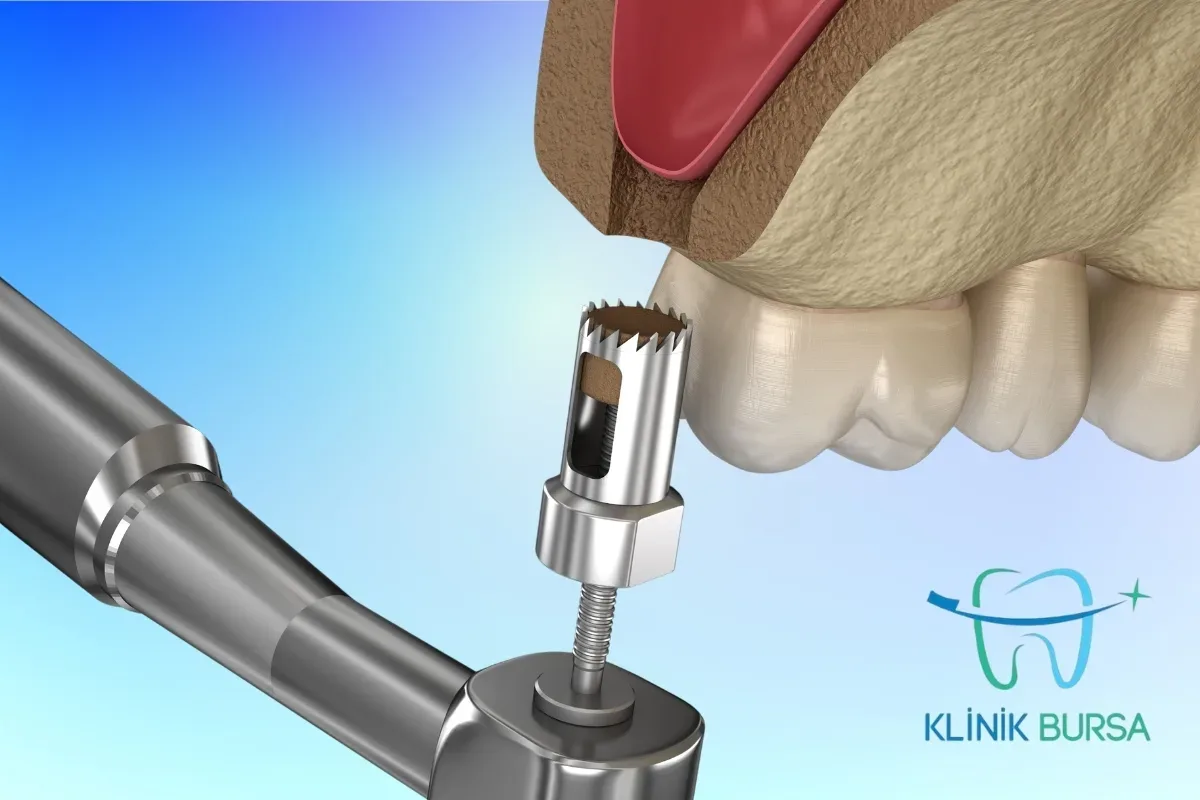
When tooth loss occurs in the posterior maxillary region, bone height may decrease over time and the…
Read More
Zirconium Dental Veneers are one of the most preferred veneer options for patients who want to have…
Read More
Aesthetic and healthy teeth are one of the most important elements that directly affect a person's s…
Read MoreContact us today to schedule your appointment.



Klinik Bursa, dişe dokunur...